






What's Happening?
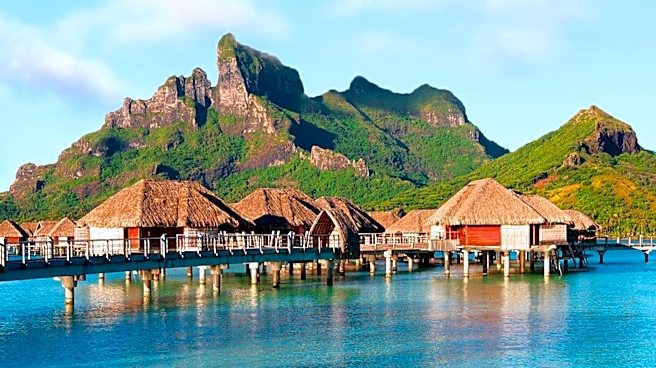
Two prominent luxury resorts in Bora Bora, the St. Regis and the Four Seasons, are being compared for their distinct offerings to travelers. The St. Regis is highlighted for its expansive property, covering 44 acres, and its larger villa accommodations,
with the smallest overwater villa measuring 1,550 square feet. It also features three restaurants, including Lagoon by Jean-Georges, which emphasizes local produce and fresh seafood. In contrast, the Four Seasons is situated on its own islet, Motu Tehotu, accessible only by boat, and focuses on lagoon activities and family-friendly amenities. This includes resident marine biologists, a dive center, and a supervised children's club. Both resorts offer villas over water or on land, with private pools in higher-tier categories, and provide views of Mount Otemanu. They also each have a spa and a protected lagoon area for snorkeling.
Why It's Important?
The detailed comparison of these two high-end resorts is significant for the luxury travel market, particularly for those planning honeymoons or family vacations in French Polynesia. The choice between the St. Regis and the Four Seasons depends on specific traveler preferences, influencing their overall experience and satisfaction. For instance, guests prioritizing spacious accommodations and diverse dining options might lean towards the St. Regis, while those seeking a more secluded, activity-rich environment with a focus on marine life and family programs might prefer the Four Seasons. This differentiation helps travelers make informed decisions, ensuring their significant investment in a luxury vacation aligns with their expectations. The competition between such resorts also drives innovation in amenities and services within the high-end hospitality sector, benefiting future travelers.
What's Next?
As the luxury travel market continues to evolve, both the St. Regis and Four Seasons in Bora Bora will likely continue to refine their offerings to attract their target demographics. Future developments could include enhanced personalized services, new culinary experiences, or further integration of local culture and environmental sustainability into their guest programs. Travelers can expect these resorts to maintain their competitive edge by continually upgrading facilities and services to meet the demands of discerning clients. The ongoing comparison and detailed reviews will remain crucial for potential guests, guiding their choices in a highly competitive luxury destination. Both resorts will likely monitor guest feedback and market trends to adapt and innovate their unique selling propositions.
Beyond the Headlines
The detailed comparison of these resorts also reflects broader trends in luxury tourism, where travelers increasingly seek tailored experiences rather than generic opulence. The St. Regis's emphasis on spaciousness and gourmet dining caters to a segment valuing traditional luxury and culinary excellence, while the Four Seasons's focus on ecological engagement and family activities appeals to a growing demographic interested in experiential travel and educational opportunities. This divergence highlights a shift in luxury travel from mere indulgence to more meaningful and personalized engagements. Furthermore, the presence of marine biologists and dive centers at the Four Seasons underscores a growing demand for eco-conscious tourism, where guests can learn about and contribute to the preservation of natural environments, even in a luxury setting. This trend suggests a future where luxury travel will increasingly intertwine with sustainability and educational enrichment.