


What's Happening?
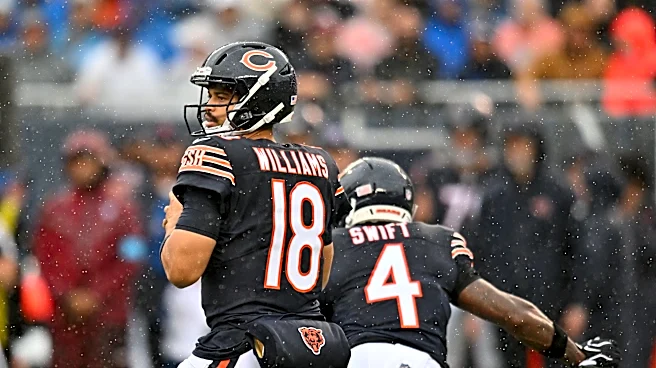
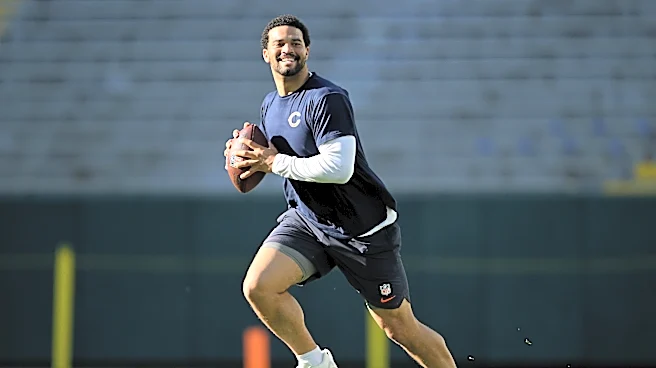
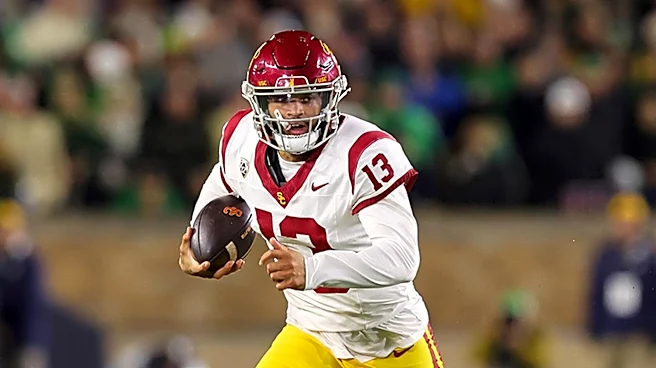
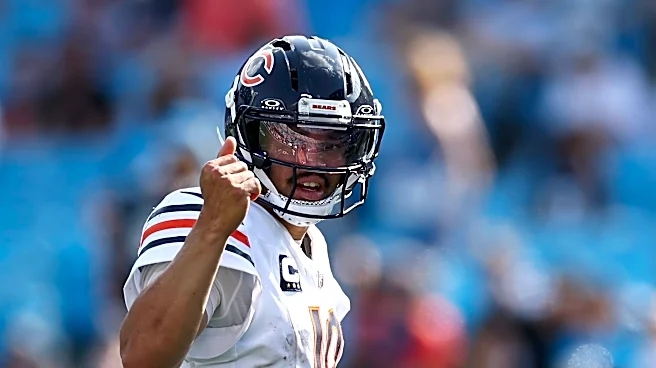
Chicago Bears quarterback Caleb Williams has clarified details regarding the hamstring injury he sustained in Week 2, stating that previous media reports about his condition were inaccurate. Williams confirmed he suffered a hamstring tear but declined
to specify its grade, citing the spread of 'false' information. Despite the injury, Williams has been a full participant in practice for two consecutive days, indicating progress toward recovery. His availability for the upcoming Week 6 game against the Atlanta Falcons remains uncertain as he still needs to complete medical protocols. The Bears have maintained a 2-1 record in his absence. Williams also addressed criticism he received for showing emotion when he was carted off the field, explaining that his tears stemmed from frustration at not being able to play with his team.
Why It's Important?
The potential return of Caleb Williams is significant for the Chicago Bears, as he is a key player and former No. 1 overall pick. His presence on the field could provide a substantial boost to the team's offensive capabilities, impacting their performance and playoff aspirations. The controversy surrounding the reporting of his injury highlights broader issues in sports journalism regarding accuracy and the athlete's right to control personal medical information. Williams's decision to withhold specific details about his injury grade, in response to what he perceives as misreporting, underscores a growing tension between athletes and media. This situation could influence how sports organizations and players manage injury disclosures in the future, potentially leading to more controlled and direct communication from teams or athletes themselves.
What's Next?
Caleb Williams's immediate future involves completing the necessary medical protocols to determine his readiness for the Week 6 game against the Atlanta Falcons. His participation in practice suggests he is trending towards a return, but the final decision rests on his ability to clear these medical hurdles. If Williams is unable to play, Tyson Bagent or Case Keenum would likely step in as quarterback for the Bears. Beyond this week, the situation could set a precedent for how Williams and the Bears communicate injury updates, potentially leading to more direct statements from the team or the player to prevent further 'false' reports. The team's performance with or without him in the coming weeks will also be closely watched, as it could impact their season trajectory.
Beyond the Headlines
This incident extends beyond a typical sports injury report, touching on themes of media ethics, athlete autonomy, and the emotional toll of professional sports. Williams's frustration with 'false' reporting raises questions about the responsibility of sports media to verify information, especially concerning sensitive medical details. His emotional response to being sidelined also sheds light on the immense pressure and passion athletes experience, challenging the often-stoic image projected in professional sports. This situation could spark broader discussions within the sports community about the balance between public interest in athlete health and the athlete's right to privacy, potentially influencing future media policies and athlete-media relations. It also highlights the psychological impact of injuries and public scrutiny on professional athletes.