





What's Happening?
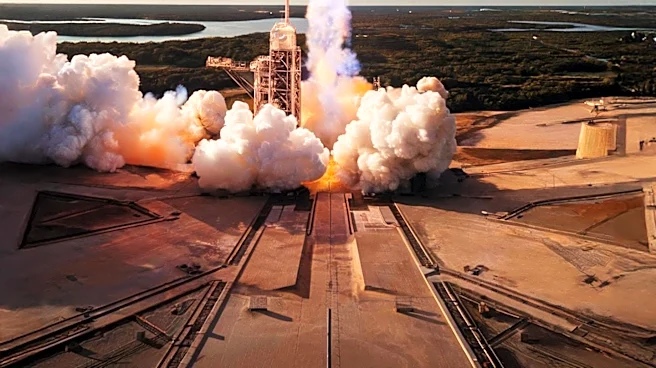
SpaceX has successfully launched 20 next-generation Starlink V3 satellites aboard Starship Flight 13, marking a significant milestone in expanding the Starlink network's capacity. The launch, which took place from Starbase in South Texas, was not a routine
satellite deployment. Instead, it served as a test for the new V3 satellites, which are designed to dramatically increase network throughput. Each V3 satellite is capable of delivering 1 Terabit per second of downlink throughput, a substantial improvement over the current V2 Mini satellites. The satellites were tasked with extending their solar arrays, deploying antennas, and attempting to integrate with the existing Starlink constellation using high-capacity inter-satellite lasers. Although the satellites were on a suborbital trajectory and burned up upon re-entry, the data collected during their brief time in orbit is crucial for future deployments.
Why It's Important?
The successful deployment and testing of the Starlink V3 satellites represent a significant advancement in satellite internet technology. The increased capacity and improved technology of the V3 satellites could potentially enhance internet connectivity for users worldwide, particularly in remote and underserved areas. This development is crucial for SpaceX's goal of providing high-speed internet globally. However, the transition to operational V3 satellites will require FCC spectrum approval and a consistent launch schedule to build out the constellation. The successful test indicates that the hardware can survive deployment and integrate with the existing network, paving the way for future service improvements.
What's Next?
For the V3 satellites to become operational, SpaceX must secure FCC approval for the new satellite class and maintain a steady launch cadence to deploy a full constellation. The company will need to address these regulatory and logistical challenges before customers can experience the enhanced speeds promised by the V3 technology. The successful test of the V3 satellites is a step forward, but significant work remains to translate these advancements into real-world service improvements for Starlink users.