






What's Happening?
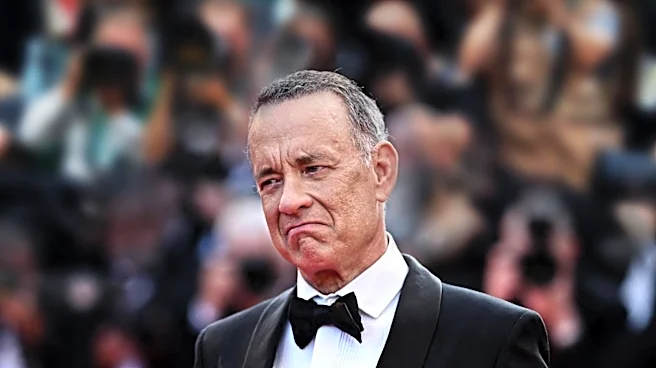
Tom Hanks's 1999 performance in Robert Zemeckis's film 'Cast Away' is being highlighted for the extreme physical demands it placed on the actor. To accurately portray Chuck Noland, a FedEx employee stranded on a deserted island, Hanks underwent a significant
body transformation. Initially, he gained weight for the first half of the production, stating he "did not do a thing except eat." Following this, production was halted for a year, during which Hanks lost 55 pounds to depict Noland's emaciated state after years of isolation. This rigorous process, which Hanks described as "back-breaking" and "no fun for anybody," was a monumental undertaking that he admitted almost cost him his life. Despite the physical toll, his performance earned him a 'Best Actor' nomination at the Academy Awards.
Why It's Important?
Tom Hanks's commitment to his role in 'Cast Away' underscores the intense dedication actors sometimes undertake for their craft, pushing the boundaries of physical and mental endurance. This level of transformation, while lauded for its authenticity and resulting in critical acclaim, also raises questions about the health risks involved in such extreme methods. The film's success, partly attributed to Hanks's believable portrayal of a man struggling for survival, highlights the impact of method acting on cinematic realism and audience engagement. For the entertainment industry, it serves as a benchmark for immersive performances, yet also as a cautionary tale regarding the potential dangers. The enduring discussion around this performance emphasizes the public's fascination with the sacrifices actors make to bring characters to life, and how these efforts contribute to a film's legacy and cultural impact.
What's Next?
While Tom Hanks has not undertaken such a dramatic body transformation since 'Cast Away,' the film continues to be a reference point for discussions on actor dedication and the physical demands of filmmaking. The legacy of his performance will likely persist in film studies and acting discussions, serving as an example of extreme commitment to a role. Future actors considering similar transformations may look to Hanks's experience as both an inspiration and a warning. The film's continued relevance also means it will likely be re-evaluated in the context of evolving industry standards for actor well-being and the ethical considerations of demanding such physical changes. The story of 'Cast Away' and Hanks's role in it will remain a significant chapter in the history of cinematic performances.
Beyond the Headlines
Tom Hanks's 'back-breaking' performance in 'Cast Away' delves into the deeper psychological and ethical dimensions of acting. Beyond the physical transformation, it speaks to the immersive nature of method acting and the potential blurring of lines between the actor's self and the character. The experience of near-death for a role raises ethical questions about the responsibilities of filmmakers and the industry towards actor safety and well-being. It also highlights the societal value placed on authenticity in performance, sometimes at a significant personal cost to the artist. This extreme dedication can be seen as a form of artistic sacrifice, contributing to the mythos of the 'suffering artist.' The film's enduring impact, partly due to this raw portrayal, prompts reflection on the boundaries of art and the human body, and the psychological resilience required to inhabit such demanding roles.