







What's Happening?
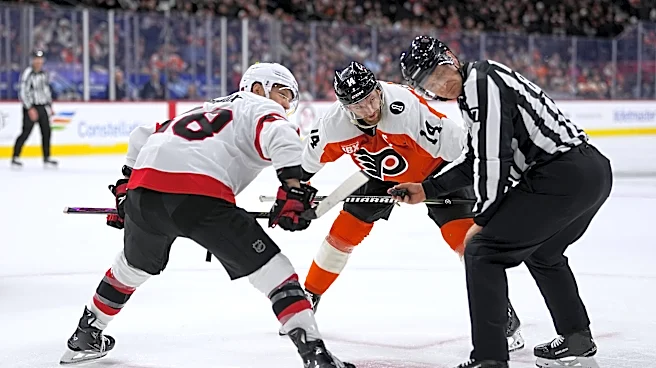
The Philadelphia Flyers have made a significant move in the NHL free agency by offering a five-year, $90 million offer sheet to Anaheim Ducks center Leo Carlsson. This offer, which carries an average annual value of $18 million, could make Carlsson the highest-paid
player in the NHL for the 2026-27 season. Under NHL rules, the Anaheim Ducks have seven days to match the offer or decline it. If they choose not to match, they will receive four first-round draft picks from the Flyers over the next four seasons. This aggressive strategy by the Flyers aims to secure a young, high-caliber center without waiting for player development through their own system. The decision now rests with the Ducks, who must weigh the benefits of retaining Carlsson against the potential draft compensation.
Why It's Important?
This development is crucial as it highlights the strategic use of offer sheets in the NHL, a mechanism not frequently employed due to its potential to strain relationships between teams and its impact on future team-building efforts. For the Flyers, acquiring Carlsson could immediately enhance their offensive capabilities and signal a shift towards a more aggressive team-building phase. However, this comes at the cost of significant draft capital, which could limit their ability to rebuild through future drafts. For the Ducks, the decision involves balancing the immediate financial implications of matching the offer against the long-term benefits of retaining a promising young player. The outcome of this situation could set a precedent for future negotiations involving young NHL stars.
What's Next?
Anaheim has until July 10, 2026, to decide whether to match the Flyers' offer. This period is critical for the Ducks as they evaluate Carlsson's value and the potential impact on their salary cap and team strategy. If they match the offer, they retain Carlsson but commit to a substantial cap hit. If they decline, they gain valuable draft picks but lose a player who could be central to their future success. The decision will likely influence how other teams approach restricted free agents and could lead to more aggressive use of offer sheets in the NHL.
Beyond the Headlines
The Flyers' offer to Carlsson could influence the broader NHL market by encouraging teams to explore offer sheets as a viable strategy for acquiring young talent. This move also underscores the growing financial flexibility teams have due to the increasing salary cap, allowing for more ambitious contracts. The structure of Carlsson's proposed contract, heavily weighted with bonuses, adds another layer of complexity, affecting both the player's financial security and the team's cash flow management. This case could reshape how teams negotiate with young stars and manage their salary cap strategies.