



What's Happening?
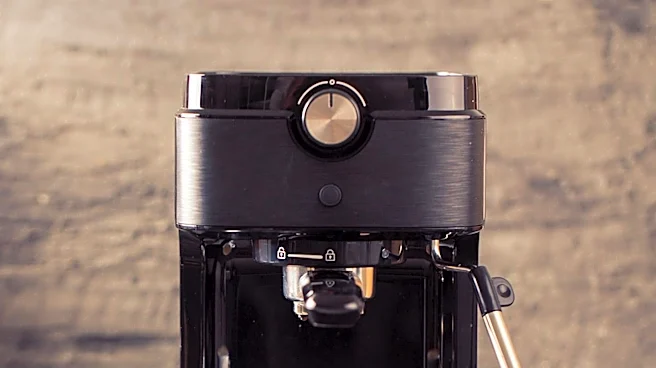
Lavazza has introduced the Tablì, a single-serve espresso machine that addresses concerns about single-use waste by utilizing compressed coffee tabs instead of traditional plastic or aluminum capsules. The machine is designed to brew espresso, lungo,
and double espresso. According to a review, the Tablì is straightforward to operate: users fill the water tank, insert a coffee tab, and select their desired drink. After brewing, the used coffee puck automatically drops into a compartment, similar to automatic espresso machines. The coffee tabs are made from 100% compressed coffee, with no plastic casing, binders, or coatings, offering an alternative to conventional pod machines. The review noted that while the machine is easy to use, the coffee options are less varied than with Nespresso or Keurig, and the cost per cup is higher.
Why It's Important?
The introduction of the Lavazza Tablì is significant for the U.S. coffee market, particularly for consumers concerned about environmental impact. The machine's use of plastic-free coffee tabs directly addresses the growing demand for sustainable products and reduced single-use plastic waste. This innovation could influence other coffee machine manufacturers to explore more eco-friendly alternatives to traditional pods, potentially leading to a broader shift in the industry. While the higher cost per cup and limited coffee variety might be initial drawbacks, the environmental benefit could attract a niche market of environmentally conscious consumers. This development highlights the increasing pressure on companies to integrate sustainability into their product design and business models.
What's Next?
The success of the Lavazza Tablì will likely depend on consumer adoption and the company's ability to expand its coffee tab offerings and potentially reduce costs. If the Tablì gains traction, it could spur competitors to innovate in the sustainable single-serve coffee market, leading to more eco-friendly options for consumers. We might see increased research and development into biodegradable or compostable coffee pods and tabs across the industry. Additionally, consumer demand for sustainable products could influence retail strategies, with more stores prioritizing environmentally friendly coffee solutions. The long-term impact could be a significant reduction in plastic waste generated by single-serve coffee machines in the U.S.
Beyond the Headlines
The Lavazza Tablì's design reflects a broader societal movement towards conscious consumption and a re-evaluation of convenience versus environmental responsibility. The 'pod problem' has been a significant point of contention for environmental advocates, and Lavazza's solution offers a tangible step forward. This product could also influence consumer perceptions of what constitutes 'premium' in the coffee market, shifting focus from just flavor and convenience to include sustainability. It challenges the notion that convenience must come at an environmental cost, potentially fostering a new standard for product innovation where ecological impact is a primary consideration. This could lead to a more holistic approach to product development across various industries, prioritizing both user experience and planetary well-being.