







What's Happening?
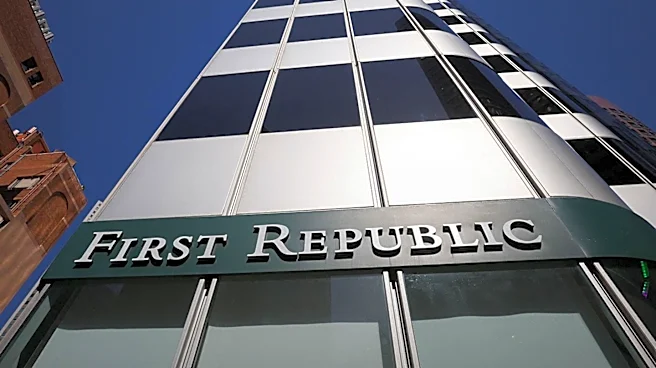
JPMorgan Chase, the largest bank in the United States, acquired First Republic Bank in May 2023. This strategic acquisition is part of JPMorgan Chase's ongoing efforts to enhance its position in the wealth management and private banking sectors. The financial
giant is also actively expanding its digital banking capabilities and artificial intelligence initiatives. Despite navigating market volatility and regulatory challenges, JPMorgan Chase consistently reports strong quarterly earnings and maintains its leadership in investment banking fees. The bank's history dates back to 1799, with the modern entity forming from the 2000 merger of J.P. Morgan & Co. and Chase Manhattan Bank, followed by significant acquisitions like Bank One, Bear Stearns, and Washington Mutual.
Why It's Important?
This acquisition is significant for the U.S. financial industry as it consolidates more wealth management assets under one of the nation's largest banks, potentially reshaping the competitive landscape for private banking services. For consumers, particularly high-net-worth individuals, it could mean a broader range of integrated financial products and services from a single institution. For JPMorgan Chase, the move solidifies its market dominance and provides a substantial boost to its wealth management division, which is a key area for growth and profitability in the banking sector. The continued focus on digital banking and AI initiatives also signals a broader industry trend towards technological integration to improve efficiency and customer experience, impacting how financial services are delivered across the country.
What's Next?
JPMorgan Chase is expected to continue integrating First Republic Bank's operations into its existing framework, focusing on seamless transitions for clients and leveraging the acquired expertise in wealth management. The bank will likely further invest in its digital banking and AI capabilities to maintain its competitive edge and adapt to evolving customer demands and technological advancements. Ongoing regulatory scrutiny and market volatility will remain key factors influencing its strategic decisions. The bank's commitment to racial equity, sustainable development, and community initiatives through its philanthropic arm, the JPMorgan Chase Foundation, suggests continued engagement in social programs, which could influence its public image and stakeholder relations.
Beyond the Headlines
The acquisition of First Republic Bank by JPMorgan Chase highlights a broader trend of consolidation within the U.S. banking sector, particularly among larger institutions seeking to expand their market share and service offerings. This consolidation can lead to increased stability in the financial system by absorbing struggling entities, but it also raises questions about market concentration and potential impacts on smaller regional banks. The emphasis on AI and digital transformation by JPMorgan Chase underscores the accelerating technological shift in finance, which could lead to more personalized services but also new challenges related to data privacy and cybersecurity. The long-term implications include a potential shift in how banking services are accessed and delivered, with a greater reliance on digital platforms and sophisticated data analytics.