





What's Happening?
Ford has commenced the manufacturing of lithium iron phosphate (LFP) prismatic battery cells at its BlueOval Battery Park Michigan facility in Marshall. The first U.S.-made LFP cells were shipped on November 18, 2026, and are destined for the Louisville
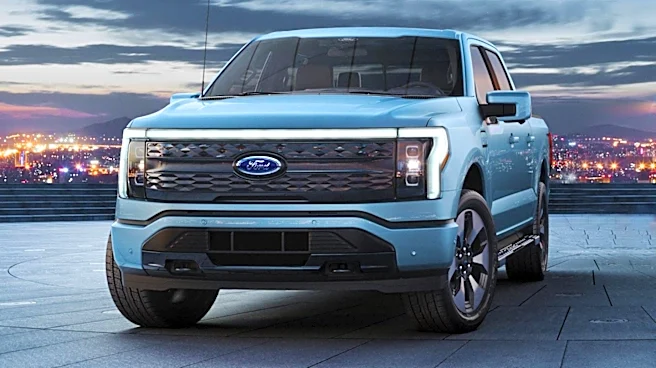
Assembly Plant in Kentucky. These batteries will power prototypes of Ford’s upcoming Fathom electric pickup. This milestone marks Ford as the first automaker to produce LFP batteries in the United States for mainstream consumer vehicles. The Michigan plant utilizes technology from CATL, enabling the production of batteries without nickel or cobalt, which contributes to reduced costs and enhanced durability. The facility is designed to produce 40 cells per minute, making it one of the fastest LFP prismatic battery operations outside of China. These batteries also support bidirectional charging, allowing equipped vehicles to supply electricity to homes. Ford plans to launch its battery pack plant in Marshall in 2027, coinciding with the Fathom’s introduction.
Why It's Important?
This development is significant for the U.S. automotive industry and its push towards electric vehicle (EV) adoption and domestic manufacturing. By producing LFP batteries in the U.S., Ford aims to reduce reliance on foreign supply chains, particularly from China, which currently dominates global EV production and battery manufacturing. The use of LFP technology, which foregoes nickel and cobalt, addresses cost concerns and offers a more sustainable battery solution. This move could make EVs more affordable for consumers, thereby accelerating their adoption. Furthermore, the integration of prismatic cells directly into the vehicle chassis as structural components is expected to reduce vehicle weight, parts count, and manufacturing complexity. The bidirectional charging capability also adds value by allowing EVs to serve as mobile power sources, potentially enhancing grid stability and energy independence for homeowners.
What's Next?
The LFP battery cells produced at BlueOval Battery Park Michigan will initially be used for prototypes of Ford's Fathom electric pickup, with the full battery pack plant expected to be operational in 2027. This suggests a phased rollout of the new battery technology into Ford's EV lineup. The success of this domestic battery production could influence other U.S. automakers to invest further in localized battery manufacturing, potentially leading to a more robust domestic EV supply chain. Future developments may include increased production capacity at the Michigan plant and the expansion of LFP battery technology to other Ford EV models. The bidirectional charging feature could also lead to new partnerships with energy providers and the development of home energy management systems that integrate EVs.
Beyond the Headlines
Ford's initiative to manufacture LFP batteries in the U.S. has broader implications beyond just vehicle production. It highlights a strategic effort to enhance national energy security and reduce geopolitical risks associated with critical mineral supply chains. The move could also stimulate job growth in advanced manufacturing sectors within the U.S. and foster innovation in battery technology. However, the source also notes that the U.S. still lags significantly behind China in EV production and battery capacity, suggesting that more comprehensive policy support may be needed to truly compete on a global scale. The discussion around 'bad federal policies' in 2025 and 2026, such as the elimination of EV tax credits and reduced fuel economy standards, underscores the critical role of government incentives and regulations in shaping the future of the U.S. EV market and its competitiveness.