






What's Happening?
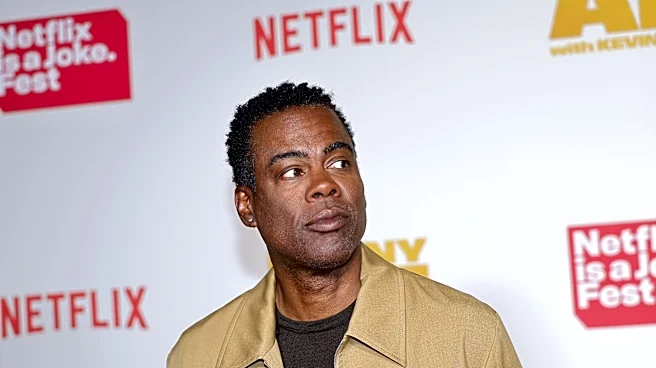
Comedian Chris Rock recently recounted an uncomfortable interaction with actor Jude Law following a joke Rock made about Law during his opening monologue at the 2005 Academy Awards. In an interview with Variety, Rock, who hosted the Oscars for the first
time that year, admitted he "went a little too hard" on Law. The joke centered on Law's prolific acting career at the time, questioning his ubiquity in films. Rock recalled bumping into Law at the Chateau Marmont shortly after the ceremony, where Law was reportedly "definitely not having it." Rock also mentioned that Courtney Love, who was with Law, was "growling, 'Get the f—k out of here.'" Law had previously addressed the joke in a 2006 New York Times interview, expressing initial amusement but then anger as the remarks became more personal.
Why It's Important?
This incident highlights the delicate balance comedians face when hosting high-profile events like the Oscars, where humor can easily cross into personal offense. The public nature of the Academy Awards means that any perceived slight or controversial joke can have lasting repercussions for those involved, affecting professional relationships and public image. For actors like Jude Law, being the subject of such jokes can be frustrating, especially when they feel their professional efforts are being trivialized. For comedians like Chris Rock, the pressure to deliver memorable and edgy content often clashes with the need to maintain decorum and respect for their peers. This dynamic underscores the broader challenges of navigating humor and celebrity in the entertainment industry, where personal feelings and professional obligations often intersect in the public eye.
What's Next?
While Rock and Law are reportedly "fine now," this anecdote serves as a reminder of the potential for tension in live award show hosting. Future Oscar hosts will likely continue to grapple with the challenge of delivering engaging and humorous monologues while avoiding controversy. The incident may also influence how comedians approach their material for such events, potentially leading to more cautious or carefully vetted jokes. For the Academy, it reinforces the importance of selecting hosts who can manage the fine line between entertainment and potential offense. The ongoing discussion about the nature of humor at public events will likely persist, shaping future interactions and performances in the entertainment industry.
Beyond the Headlines
This story delves into the unspoken rules and social dynamics within Hollywood. The power imbalance between a host and a celebrated actor, and the public nature of the Oscars, amplify the impact of such interactions. It also touches on the cultural expectation for celebrities to be good-natured about jokes at their expense, even when those jokes feel personal or unfair. Law's reaction, and Rock's subsequent reflection, reveal the human element behind the glitz and glamour of Hollywood, where personal feelings and professional reputations are constantly at play. The incident also subtly highlights the scrutiny actors face regarding their career choices and public perception, as Law's prolific output became the subject of Rock's humor.