




What's Happening?
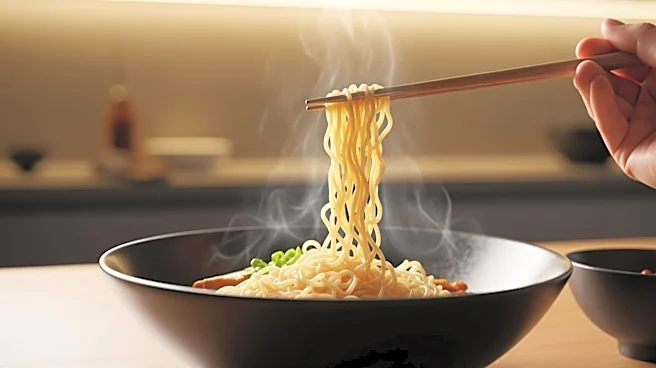
Ramen has evolved from a niche ethnic offering to a mainstream culinary category in the United States, driven by the efforts of companies like Sun Noodle. Founded in Hawaii in 1981, Sun Noodle has played a pivotal role in integrating ramen into American
dining by providing high-quality noodles and collaborating with chefs to innovate menu offerings. The company, rooted in Japanese noodle-making traditions, has expanded its customer base from independent ramen shops to a wide range of foodservice operators, including universities, hospitals, and catering services. Sun Noodle's products are now used in various applications, from traditional soup bowls to fusion dishes and grab-and-go formats, allowing chefs to incorporate regional flavors and seasonal ingredients while maintaining consumer familiarity with noodle-based meals.
Why It's Important?
The expansion of ramen in the U.S. foodservice industry highlights the growing influence of international culinary trends on American dining habits. Ramen's adaptability and operational flexibility make it an attractive option for foodservice operators looking to innovate their menus and increase profitability. By offering a versatile platform for menu development, ramen allows operators to cater to diverse consumer preferences, including plant-based and fusion dishes. This trend not only broadens the appeal of ramen but also supports the growth of businesses like Sun Noodle, which provide the necessary products and expertise to facilitate this culinary evolution. As ramen continues to gain popularity, it reflects broader shifts in consumer tastes towards more diverse and experiential dining options.
What's Next?
As ramen's popularity continues to rise, foodservice operators are likely to further explore its potential as a menu staple. Sun Noodle plans to support this growth by offering product sampling, menu ideation, and operational support to help operators integrate ramen into their offerings. The company anticipates that ramen will continue to find new opportunities across the foodservice sector, driven by its ability to respect tradition while allowing for creative expression. Operators may introduce ramen through limited-time offers, stir-fry applications, and customizable bowl programs to gauge customer demand and refine their offerings. This approach will enable them to capitalize on ramen's flexibility and appeal to a broad range of consumers.
Beyond the Headlines
The rise of ramen in the U.S. foodservice industry also underscores the importance of cultural exchange in shaping culinary trends. As American chefs incorporate regional flavors into traditional ramen frameworks, they contribute to a dynamic culinary landscape that blends authenticity with innovation. This cultural fusion not only enhances the dining experience but also fosters a deeper appreciation for diverse food traditions. Additionally, the growing interest in plant-based and health-oriented ramen options reflects broader societal shifts towards sustainable and health-conscious eating habits. As these trends continue to evolve, they may influence other areas of the foodservice industry, encouraging further experimentation and cross-cultural collaboration.