





What's Happening?
The Commodity Futures Trading Commission (CFTC), a U.S. government entity, has filed a lawsuit against the state of Utah in federal court. This legal action is part of an ongoing dispute regarding the regulation of online prediction markets, specifically
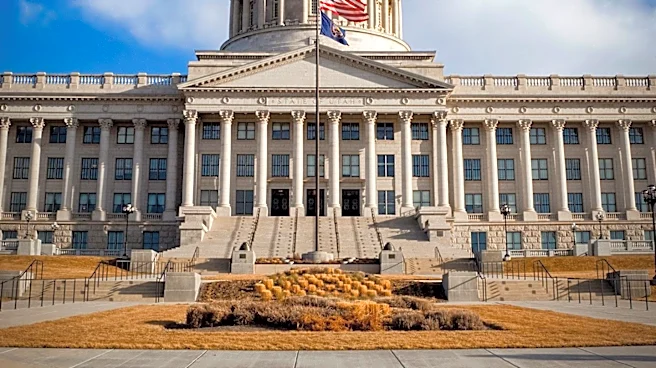
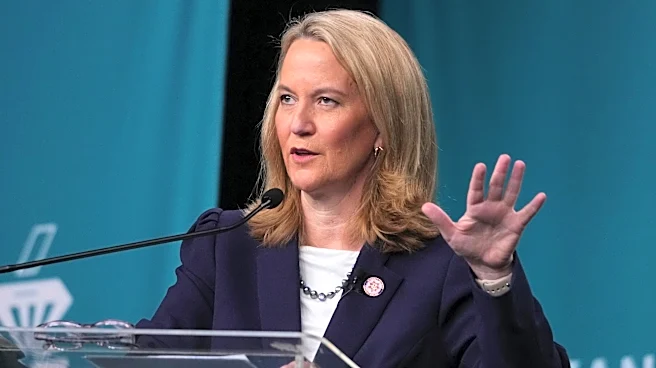
targeting Utah's efforts to shut down platforms like Kalshi. The CFTC asserts that it holds exclusive federal jurisdiction over these markets, which it classifies as legal financial contracts due to the 'financial, economic, or commercial consequence' of their outcomes. The federal agency is seeking a ruling to prevent Utah's lawsuit against Kalshi from proceeding and an injunction to stop the state from investigating CFTC-regulated entities for alleged violations of state laws. Utah's recent lawsuit against Kalshi accused the platform of 'unlawful conduct' by allowing residents to trade event contracts on various future events, including political races, sporting events, and weather outcomes, which the state considers illegal betting. CFTC Chair Michael S. Selig emphasized that Congress entrusted the CFTC with sole responsibility for overseeing these markets, and the agency is committed to defending its exclusive jurisdiction over commodity derivatives.
Why It's Important?
This legal battle highlights a significant conflict between state and federal regulatory authority over emerging financial markets. The outcome could establish a precedent for how prediction markets, and potentially other innovative financial instruments, are regulated across the United States. If the CFTC successfully asserts its exclusive jurisdiction, it would solidify the federal government's role in overseeing these platforms, potentially leading to a more uniform national regulatory framework. Conversely, a ruling favoring Utah could empower states to impose their own regulations, creating a fragmented and potentially complex regulatory landscape for companies operating in this space. The dispute also touches upon the definition of 'gambling' versus 'financial contracts,' which has broader implications for how speculative activities are classified and regulated. The CFTC's argument that event contracts provide valuable public information about future outcomes underscores a potential economic benefit that could be stifled if states are allowed to unilaterally shut down these markets. The involvement of over 40 attorneys general disputing the CFTC's proposed rule indicates widespread state concern over federal overreach or the implications of unfettered prediction market operations.
What's Next?
The lawsuit filed by the CFTC against Utah will proceed in federal court, with the federal agency seeking a ruling to prevent Utah's legal actions against Kalshi and other CFTC-regulated entities. This case is one of several similar legal actions, as the CFTC has also pursued legal measures against nine other states attempting to regulate prediction markets. A previous action against Minnesota resulted in an injunction, suggesting a potential path forward for the CFTC in this case. With suits currently open in four federal appeals courts, it is widely anticipated that the U.S. Supreme Court will ultimately have the final say on the jurisdictional dispute between state and federal authorities regarding prediction markets. The ongoing legal proceedings will likely involve extensive arguments from both sides concerning the interpretation of federal preemption and the scope of state gambling laws versus federal financial regulations. The resolution of these cases will determine the future regulatory environment for prediction markets in the U.S., impacting both operators and participants.
Beyond the Headlines
The core of this dispute extends beyond mere regulatory jurisdiction; it delves into fundamental questions about the nature of speculative markets and the balance of power between federal and state governments. The CFTC's stance that prediction markets offer valuable information about future events suggests a recognition of their potential utility beyond simple wagering, possibly influencing economic forecasting or risk management strategies. However, states like Utah view these activities as gambling, raising ethical and social concerns about consumer protection and potential addiction. The eventual Supreme Court decision will not only clarify regulatory boundaries but also implicitly define the legal and ethical status of prediction markets in the U.S. This could lead to a re-evaluation of existing gambling laws and financial regulations, potentially paving the way for new legislation or a more nuanced approach to regulating activities that blur the lines between entertainment, speculation, and legitimate financial instruments. The outcome will also influence the innovation and growth of fintech companies operating in this evolving sector.