


What's Happening?
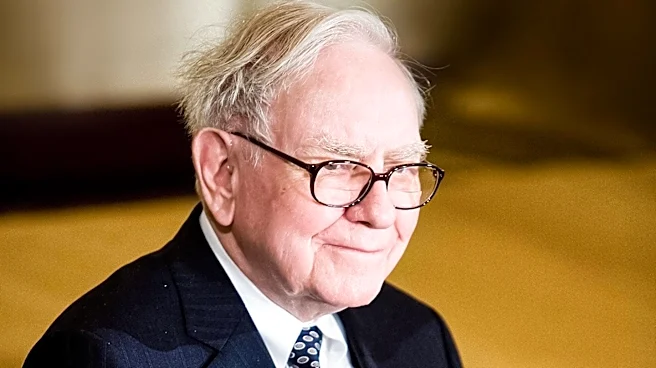
Warren Buffett, the renowned investor known as 'the Oracle of Omaha,' has publicly identified his 1993 acquisition of Dexter Shoe Company as his 'worst deal.' Berkshire Hathaway purchased Dexter Shoe for $433 million, paid in Berkshire stock. Buffett initially
believed the company possessed a competitive advantage, but it ultimately performed poorly, becoming nearly worthless before being absorbed into Berkshire's H.H. Brown Shoe business. In a 2008 note to shareholders, Buffett expressed significant regret over the transaction, stating that using Berkshire stock 'compounded [his] error hugely.' He calculated that the true cost to Berkshire shareholders was not just the initial $400 million but considerably more, effectively giving away 1.6% of a 'wonderful business.' Despite the financial misstep, Buffett maintained that errors are an inherent part of the investing experience and did not allow this particular deal to cause him to second-guess his overall investment instincts.
Why It's Important?
This reflection from Warren Buffett offers a rare glimpse into the decision-making process and occasional misjudgments even by the most successful investors. For U.S. investors and business leaders, it underscores the inherent risks in mergers and acquisitions, particularly when using company stock as currency. The deal highlights how an initial valuation can dramatically change over time, especially when the acquired asset fails to meet expectations. The $433 million in Berkshire stock given to Dexter's owner, Harold Alfond, is now valued at over $20 billion, demonstrating the immense opportunity cost for Berkshire Hathaway shareholders. This case serves as a cautionary tale about the long-term implications of M&A decisions and the potential for even seasoned professionals to make significant errors, emphasizing the importance of rigorous due diligence and strategic foresight in corporate finance.
Beyond the Headlines
Beyond the immediate financial implications, Buffett's candid admission about the Dexter Shoe deal provides valuable lessons on humility and resilience in the business world. His willingness to acknowledge a major mistake, even years later, reinforces the idea that failure is a part of the learning process, rather than an end. This perspective can influence how U.S. business leaders and entrepreneurs approach risk and setbacks, encouraging a culture where errors are analyzed for future improvement rather than hidden. Furthermore, the story of Harold Alfond's shares, which grew to over $20 billion and were left to the Harold Alfond Foundation, illustrates the powerful long-term impact of strategic philanthropy and how initial business transactions can indirectly fuel significant charitable endeavors, benefiting society far beyond the original deal's intent.