






What's Happening?
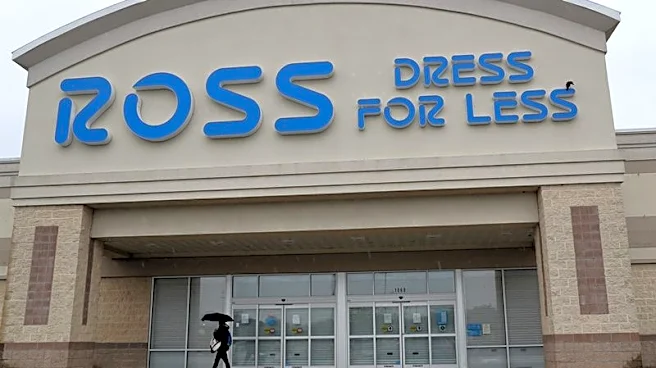
Ross Stores, an off-price retailer, is expanding its merchandise assortment to include higher-priced items, a strategy aimed at attracting new shoppers while maintaining its value proposition. This shift comes as the company reported an 8% year-over-year
increase in comparable store sales in the third quarter of 2026, primarily driven by increased customer traffic. Data from Placer.ai indicates a 12.3% year-over-year growth in same-store visits during the quarter. Ross CEO Jim Conroy stated that the company is successfully attracting new customers, re-engaging lapsed customers, and seeing more frequent visits from existing shoppers across various income levels and age groups, including younger demographics. Conroy first discussed these pricing adjustments in March, noting that the company had gained confidence in introducing higher-priced goods into its stores.
Why It's Important?
This strategic pricing adjustment by Ross Stores signifies a notable evolution in the off-price retail sector. By introducing higher-priced goods, Ross aims to broaden its customer base and potentially increase its average transaction value, impacting its revenue and market share. This move could also influence competitor strategies within the discount retail landscape, potentially leading other off-price retailers to re-evaluate their merchandise offerings. For consumers, this means a wider selection of products at Ross, though some items may come with a higher price tag than traditionally expected from the retailer. The success of this strategy could demonstrate the adaptability of off-price models to changing consumer preferences and economic conditions, particularly as the company seeks to appeal to a broader range of income levels and age groups.
What's Next?
Ross Stores plans to continue expanding its merchandise assortment, with an ongoing focus on identifying opportunities with new and existing vendor partners. While some new offerings will feature higher price points, CEO Jim Conroy has emphasized the company's commitment to keeping prices "as low as possible" to maintain its core value proposition. The company will likely monitor customer reception to these new price points and adjust its strategy accordingly. Future earnings reports will provide further insight into the financial impact of this pricing shift and its effectiveness in attracting and retaining a diverse customer base. The retail industry will be observing whether this strategy allows Ross to sustain its sales growth and market position in the competitive off-price segment.
Beyond the Headlines
The decision by Ross Stores to introduce higher-priced goods reflects a broader trend in retail where traditional segment boundaries are blurring. This move could be interpreted as an attempt to capture a larger share of consumer spending by appealing to those who might typically shop at mid-tier department stores, while still catering to its core value-conscious customers. It also highlights the dynamic nature of consumer expectations, where value is increasingly perceived not just as low price, but also as access to a wider range of brands and fashion. This strategy could lead to a redefinition of what constitutes 'off-price' retail, potentially pushing the sector towards a more diversified product offering that balances affordability with perceived quality and brand appeal. The long-term success of this approach could set a precedent for how discount retailers adapt to evolving market demands and consumer behaviors.