





What's Happening?
Kellogg Park in La Jolla Shores is celebrating its 75th anniversary, marking decades as a vital recreational and community space. Donated 80 years ago and formally dedicated 75 years ago, the park was established through a deed of dedication by Florence
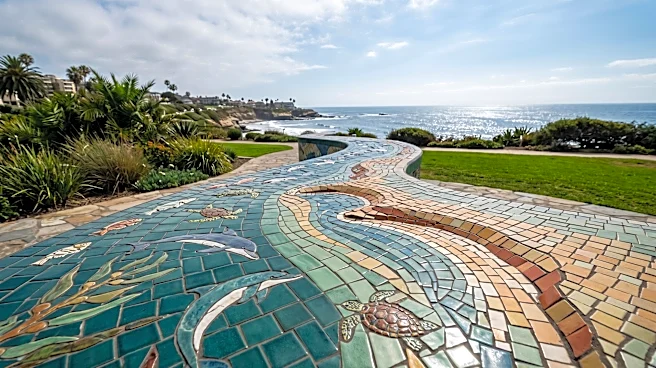
Scripps Kellogg, wife of Frederick William Kellogg. The donation included strict deed restrictions designed to ensure the property remains a public park in perpetuity and to prevent commercial development. These restrictions also stipulate that at least 60 percent of the park must be covered by plantings. The park continues to be a popular destination, hosting numerous city-permitted events annually and attracting a wide range of visitors for family picnics, sporting activities, and community gatherings. Its amenities include a large grassy expanse, a shaded playground, and the 'The Map' mosaic, an educational installation depicting local marine life and topography.
Why It's Important?
Kellogg Park's enduring success as a public space, maintained through strict deed restrictions, serves as a significant model for urban planning and community preservation in the U.S. The foresight of Florence Scripps Kellogg in establishing these conditions has ensured continuous public access to valuable oceanfront property, preventing commercialization and maintaining green space in a highly desirable area. This approach highlights the power of philanthropic donations coupled with legal safeguards to protect public interests for generations. The park's popularity underscores the ongoing demand for accessible recreational areas and community gathering spots, particularly in coastal regions. Its continued use for diverse events, from family outings to educational trainings, demonstrates its integral role in the social fabric of La Jolla and its contribution to the quality of life for residents and visitors.
What's Next?
The popularity of Kellogg Park is expected to continue, with dozens of city-permitted events scheduled annually. The Walter Munk Foundation recently proposed a public art project for the park, inviting the public to 'adopt' interlocking fish tiles designed by MC Escher, which will form an installation around the flagpole. This project, approved at both local and city levels, signifies ongoing community engagement and efforts to enhance the park's appeal. Future initiatives will likely focus on fundraising for repairs and maintenance, as well as continued advocacy to protect the park from environmental elements. The success of Kellogg Park may also inspire other communities and philanthropists to consider similar deed-restricted donations to preserve public spaces and natural resources.
Beyond the Headlines
The story of Kellogg Park extends beyond its recreational value, offering insights into the historical development of La Jolla and the lasting legacy of prominent families like the Kelloggs and Scripps. The deed restrictions placed on the park reflect a deep-seated concern for community welfare and a desire to safeguard natural beauty against unchecked development. This historical context provides a valuable lesson in urban conservation and the importance of long-term planning for public spaces. The park's ability to thrive for 75 years under these conditions demonstrates the effectiveness of such legal frameworks in preserving community assets. It also highlights the ongoing tension between development pressures and the desire to maintain open, accessible public lands, a challenge faced by many coastal communities across the U.S.