




What's Happening?
Michael Burry, known for his bet against the U.S. housing market, has indicated an interest in Netflix (NFLX) shares if they drop to the high $30s. This price point would represent a significant decline from its mid-2025 record and its closing price of
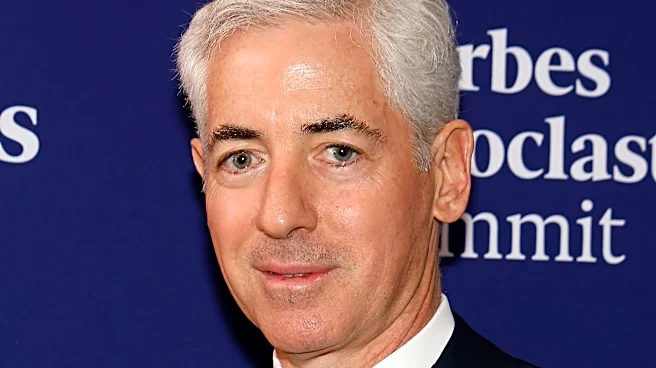
$56.73 on November 20. Burry's valuation is based on his estimate of Netflix's intrinsic value, which he previously assessed at around $42 per share when the stock was trading at $67.75 in July. He has since lowered his ideal entry threshold, citing concerns about the durability of Netflix's content library, comparing it unfavorably to Walt Disney's Pixar, stating, 'Disney produces wine. Netflix produces milk.' This perspective contrasts with Bill Ackman's Pershing Square, which has increased its stake in Netflix, holding 15.41 million shares valued at $1.07 billion as of September 30, up from 13.08 million shares in June. Ackman views the current valuation as unusually low and believes a cheaper share price benefits long-term owners due to increased share repurchases.
Why It's Important?
This divergence in opinion between two prominent investors highlights the ongoing debate surrounding Netflix's valuation and future growth trajectory. Burry's bearish stance, rooted in his assessment of content longevity and intrinsic value, suggests a potential downside risk for Netflix investors if the market aligns with his lower valuation. A significant drop to the high $30s would mean a substantial loss for current shareholders. Conversely, Ackman's bullish position, supported by Netflix's share repurchase program and projected earnings per share growth of approximately 19% annually over the next three to five years, indicates confidence in the company's long-term prospects. The outcome of this debate could influence investor sentiment and capital allocation within the streaming industry, impacting not only Netflix but also its competitors as investors re-evaluate their strategies based on these differing expert analyses. The company's decelerating growth and delayed advertising build-out further complicate the investment landscape.
What's Next?
The market will likely continue to monitor Netflix's stock performance, particularly in light of its decelerating growth and the ongoing build-out of its advertising platform. Investors will be watching to see if Netflix's share price approaches Burry's target range, which could trigger a re-evaluation of the stock by other institutional and retail investors. Conversely, if Netflix's strategic initiatives, such as its advertising expansion and continued share buybacks, prove successful in boosting earnings and subscriber growth, Ackman's thesis could gain further traction. The company's ability to generate and retain valuable content will be a key factor in determining its intrinsic value and market perception. Future earnings reports and subscriber growth figures will provide critical data points for investors to assess the validity of both Burry's and Ackman's investment theses, potentially leading to significant shifts in market sentiment and stock price movements.
Beyond the Headlines
The contrasting views of Burry and Ackman on Netflix's valuation underscore a broader philosophical divide in investment strategies: value investing versus growth investing, and the assessment of intangible assets like content libraries. Burry's 'Disney produces wine. Netflix produces milk' analogy highlights the challenge for streaming services to create enduring content that retains long-term value, as opposed to content that is consumed quickly and then loses its appeal. This raises questions about the sustainability of content-heavy business models in the long run and the potential for content libraries to depreciate rapidly. The debate also touches upon the effectiveness of share buybacks as a mechanism for shareholder value creation, especially when a company's core growth is decelerating. The outcome of this investment saga could offer valuable insights into how the market values content, subscriber growth, and financial engineering in the evolving digital entertainment landscape, potentially influencing future investment trends across the technology and media sectors.