

What's Happening?
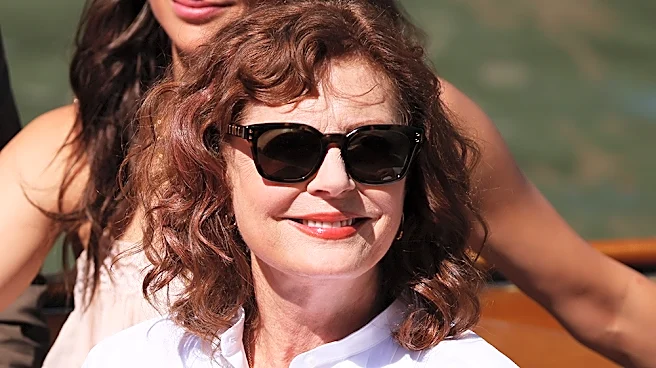
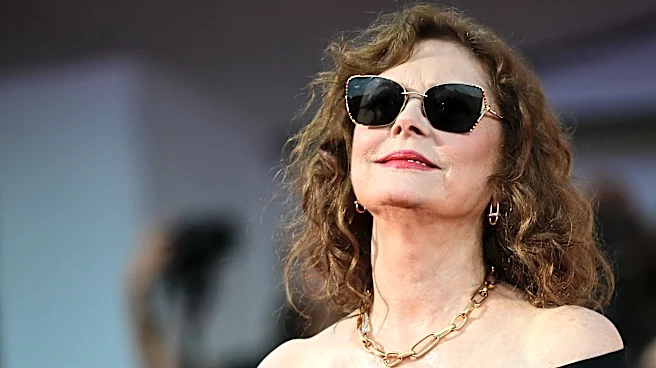
Veteran actress Susan Sarandon has stated that her outspoken support for Palestinians continues to result in her losing film roles. Speaking at the Venice Film Festival, where she is promoting her new film 'The Echo Chamber', Sarandon indicated that certain
agencies are still advising against hiring her. She noted that despite these professional repercussions, she believes there has been a significant shift in public discourse regarding the historical context of Palestine and the financial ties between Zionists and U.S. politics. Sarandon highlighted that many people are now more aware of the substantial financial aid the United States provides to Israel. This follows her being dropped by her talent agency, UTA, in 2023 after making remarks at pro-Palestinian rallies a month after the Hamas attack on Israel, where she commented on the fear felt by Jewish people in the U.S. mirroring the experiences of Muslims.
Why It's Important?
Sarandon's experience underscores the ongoing tension and potential professional consequences for public figures who take strong political stances on sensitive international conflicts, particularly the Israeli-Palestinian conflict, within the U.S. entertainment industry. Her comments reflect a broader debate about freedom of speech versus perceived antisemitism or political alignment in Hollywood. The reported shift in U.S. public opinion towards the Israeli-Palestinian conflict, as indicated by recent Pew Research Center surveys showing increased negativity towards Israel and growing sympathy for Palestinians, suggests a changing landscape for such discussions. This situation highlights the challenges faced by artists who use their platforms for activism, potentially impacting their careers and raising questions about the industry's tolerance for diverse political views.
What's Next?
The ongoing debate surrounding Sarandon's professional challenges is likely to continue to fuel discussions about political expression and its consequences in the entertainment industry. As the Israeli-Palestinian conflict remains a prominent global issue, public figures may continue to voice their opinions, potentially leading to similar professional impacts. The Venice Film Festival, where Sarandon made her remarks, has also seen calls from activists to raise the Palestinian flag, indicating that cultural events will likely remain venues for political statements. The reception of 'The Echo Chamber' and Sarandon's future roles will be observed as indicators of how the industry navigates these complex issues. The broader shift in U.S. public opinion could also influence how studios and agencies approach talent with strong political views in the future.
Beyond the Headlines
Sarandon's situation delves into the deeper implications of 'cancel culture' and the boundaries of free speech within professional spheres, particularly in an industry as influential as Hollywood. It raises questions about whether artists should be expected to separate their political beliefs from their professional lives, or if their platforms inherently come with a responsibility to speak out on social and political issues. The perceived 'blacklisting' of individuals for their political views can have a chilling effect on open discourse, potentially leading to self-censorship among other public figures. Furthermore, the incident highlights the power dynamics within the entertainment industry, where agencies and major studios can significantly impact an individual's career based on their public statements, regardless of shifting public sentiment.