




What's Happening?
Good Time Country Buffet, a new restaurant in New York City's East Village, has quickly gained popularity since its September opening. Founded by Korean Americans Yong Min Kim, Steve Choi, and David Yun, the establishment aims to bring the authentic experience
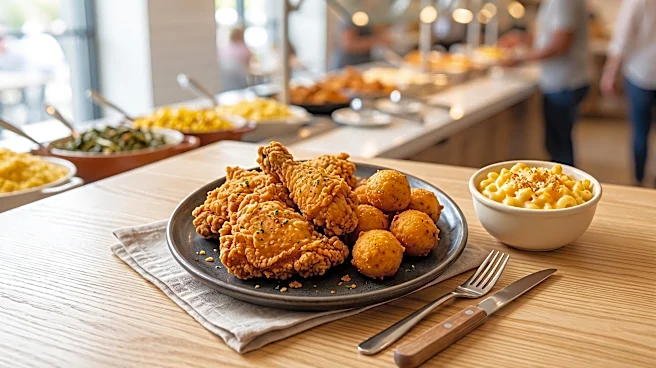
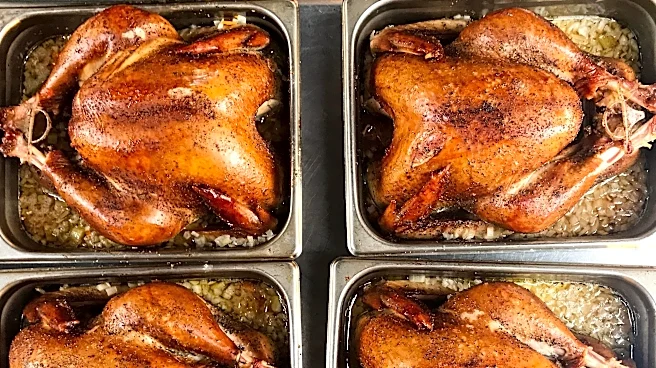
of Southern country buffets to New Yorkers. The founders, who grew up frequenting such buffets in Georgia, designed the restaurant to evoke a sense of home and nostalgia. This venture follows their previous successful restaurants, C as in Charlie and Kisa, opened in 2022 and 2024, respectively. The menu features classic Southern dishes like fried chicken, bone-in spicy wings, Salisbury steak, mac and cheese, collard greens, and hush puppies, with daily rotations. The pricing is set at $26.99 for adults and $13.99 for children under 10, making it a more affordable dining option in Manhattan. To ensure authenticity, the founders revisited country buffets in Georgia, and their chef, a college friend of Kim's, has extensive experience in Southern buffets.
Why It's Important?
The opening of Good Time Country Buffet signifies a unique cultural exchange within the U.S. culinary landscape, bringing a specific regional American dining experience to a diverse urban center like New York City. It highlights how immigrant communities, in this case, Korean Americans, can adopt and reinterpret American cultural staples, making them their own. The restaurant's success demonstrates a demand for affordable, comforting, and nostalgic food experiences in a city often characterized by high-end or trendy dining. This venture also showcases the entrepreneurial spirit of restaurateurs who identify a niche for traditional, homestyle cooking, offering an alternative to the constant influx of new, often experimental, food concepts. The emphasis on authenticity and personal history in the restaurant's concept resonates with diners seeking genuine culinary experiences.
Beyond the Headlines
Beyond its immediate success, Good Time Country Buffet represents a broader trend of culinary nostalgia and the search for comfort food in a fast-paced urban environment. The founders' decision to recreate a specific childhood memory through food speaks to the powerful connection between cuisine, identity, and personal history. It also subtly challenges perceptions of who can authentically represent certain culinary traditions, as Korean American entrepreneurs are bringing Southern comfort food to the forefront. This establishment could inspire other restaurateurs to explore niche regional American cuisines, fostering a greater appreciation for the diverse culinary heritage of the United States. The restaurant's design, featuring carpeted floors and retro wallpaper, further emphasizes the immersive nostalgic experience, creating a space that transports diners away from the typical New York City dining scene.