






What's Happening?
PVH Corp., the global clothing company owning brands like Tommy Hilfiger and Calvin Klein, is facing allegations of labor abuses in its Turkish textile factories. A report by New Lines Magazine details claims of coercion and harassment, including mandatory
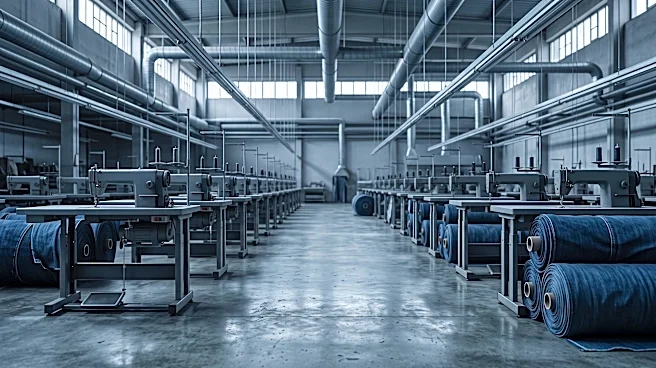
long shifts and threats of job loss for workers who refuse overtime. Baykan Denim, a Tier 1 supplier to PVH Corp., is specifically cited for these practices. Workers, many of whom are women, report enduring insults from superiors and being pressured into overtime, often working for minimum wage that barely covers living costs. The report also highlights instances where workers who lost their homes in the 2023 earthquake were dismissed without severance pay if they couldn't return to work within five days. PVH Corp. did not respond to inquiries regarding these allegations. Similar issues were reported at Kubra Ozak Tekstil, a supplier to Levi's, where workers protested for better conditions and unionization, with a Worker Rights Consortium (WRC) report finding violations of forced labor standards.
Why It's Important?
These allegations against PVH Corp. and its suppliers underscore significant ethical and human rights concerns within the global supply chains of major U.S. clothing brands. The reported practices, such as forced overtime, verbal abuse, and threats of dismissal, violate international labor standards and Turkish labor law. This situation can severely impact the reputation and consumer trust of brands like Tommy Hilfiger and Calvin Klein, as consumers increasingly demand ethical sourcing and production. For the U.S. apparel industry, these revelations highlight the risks associated with opaque supply chains and the potential for complicity in labor exploitation. It also raises questions about the effectiveness of corporate social responsibility initiatives and third-party audits, as workers claim audits are often superficial and do not reflect the true working conditions. The economic distress of workers, exacerbated by events like the 2023 earthquake, makes them particularly vulnerable to exploitation, creating a cycle of poverty and abuse.
What's Next?
The lack of response from PVH Corp. and other implicated brands suggests a potential for continued scrutiny from labor rights organizations and media. Consumers, particularly in the U.S. and Europe, may increase pressure on these brands to address the reported abuses and ensure ethical labor practices throughout their supply chains. This could lead to calls for more transparent auditing processes, stronger enforcement of labor laws, and improved worker protection mechanisms. Lawmakers and civil society groups might advocate for legislation that holds companies more accountable for the labor conditions in their international supply chains. The Turkish government, which has been criticized for insufficient labor inspections, may also face increased pressure to enforce its own labor laws more rigorously. Workers, supported by unions like BIRTEK-SEN, are likely to continue their efforts to organize and demand better working conditions, potentially leading to further protests and legal actions against factories and brands.
Beyond the Headlines
The issues exposed in the Turkish textile factories extend beyond mere labor violations, touching upon deeper societal and economic inequalities. The high femicide rates in the provinces where these factories operate, coupled with the lack of social services for vulnerable women, highlight a systemic issue where female workers bear a disproportionate burden of exploitation and societal neglect. The workers' inability to speak candidly with auditors due to fear of reprisal reveals a fundamental flaw in current auditing practices, suggesting that these mechanisms often serve to legitimize exploitative systems rather than genuinely protect workers. The economic policies that incentivize factory owners without sufficient oversight also contribute to this environment, creating a race to the bottom where labor costs are prioritized over human dignity. This situation challenges the perception of 'fast fashion' and its true human cost, urging consumers to consider the ethical implications of their purchasing decisions and pushing for a more equitable and transparent global fashion industry.