
What's Happening?
TikTok's distribution arm, SoundOn, has signed Gina Jones, the creator behind 'Gina's Pet Bangers,' a series of AI-assisted songs. Jones, a Nashville songwriter with over 30 years of experience, employs
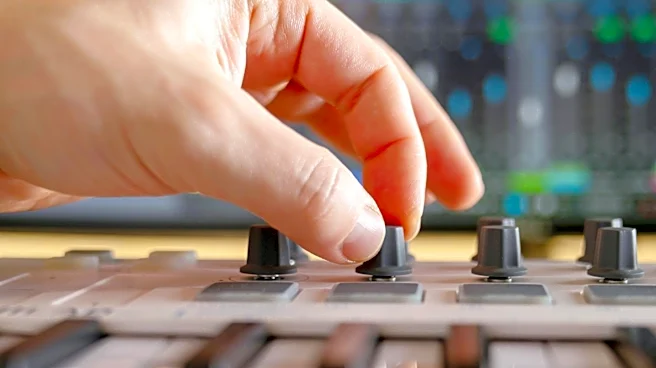
an 'AI-hybrid production approach.' This method involves her writing lyrics and melodies, then singing and playing them into an AI program that clones her voice. She then meticulously produces the tracks line-by-line, specifying desired sounds, beats per minute, and other production elements. Her recent work, including 'ugly-cute-dog-inspired country-meets-hip-hop songs' like 'Chippy Dippy Doppie Duck' and 'Leeda Beeda Boda Butt,' has gained significant traction on TikTok. The signing follows successful influencer campaigns powered by Genni (formerly Songfluencer), which helped drive the viral success of her music.
Why It's Important?
This development is significant for the music industry as it showcases the increasing integration of artificial intelligence into music creation and distribution. SoundOn's signing of Gina Jones highlights a nuanced approach to 'AI music,' moving beyond fully AI-generated content to embrace 'AI-assisted' hybrid models where human creativity remains central. This trend raises critical questions about classification (AI-generated vs. AI-assisted), intellectual property, and how such music will be treated in charts and streaming service algorithms. It also underscores the growing influence of platforms like TikTok in identifying and promoting new musical talent, regardless of their production methods. The collaboration between human artists, AI tools, and influencer marketing firms like Genni represents a new paradigm for achieving viral success and commercial viability in the digital music landscape.
What's Next?
The partnership between Gina Jones and SoundOn is expected to significantly boost the reach and numbers for 'Gina's Pet Bangers.' This collaboration could lead to increased visibility on TikTok and other platforms, potentially translating into higher streaming figures and a larger fanbase for Jones. The case will likely serve as a crucial test for how the music industry, including major labels and streaming services, will adapt to and regulate AI-hybrid music. Discussions around defining 'substantially human-made' music and ensuring proper authorization for AI services will intensify. As AI music technology continues to evolve rapidly, the industry will face ongoing challenges in establishing clear guidelines for its creation, distribution, and monetization, with Jones's success potentially influencing future policies and artist agreements.
Beyond the Headlines
Gina Jones's story delves into the evolving definition of artistry in the age of artificial intelligence. It challenges the traditional notion of a musician by demonstrating how AI can be a powerful tool for creative expression, rather than solely a replacement for human input. This hybrid approach raises philosophical questions about authorship and the value of human touch in art. Furthermore, the involvement of influencer marketing companies like Genni in propelling AI-assisted music to viral status highlights the complex interplay between technology, marketing, and audience engagement in shaping cultural trends. The ethical implications surrounding voice cloning and the potential for AI to democratize music production while simultaneously creating new legal and economic challenges for artists and labels will continue to be a central theme in the industry's future.