






What's Happening?
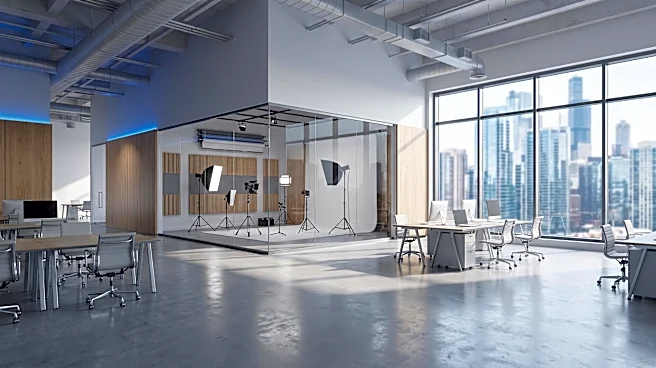
GERTRUDE, an independent brand innovation agency, has developed THE BRNDHAUS PL-ZEN™, a 35,000 square foot global brand innovation and content factory located in its Chicago headquarters. This facility is designed to address challenges clients face with
inconsistent agency partners and 'agency sprawl' by centralizing brand development, consumer co-creation, incubation, and activation under one roof. The BRNDHAUS PL-ZEN™ operates on four core principles: clarity over complexity, early creative involvement, stress-testing for longevity, and intentional revisiting and refining of brands. Beyond its primary function for brand clients, the space has also been utilized for various production needs, including photoshoots, broadcast productions, corporate meetings, and even as a location for prominent Chicago-based TV shows like 'Chicago P.D.', 'Chicago Fire', and 'Love is Blind'. Heather Knapp, with 25 years of brand guidance and strategic business leadership, leads the operations and account management for GERTRUDE, OZ MFG COMPANY, RAYE, and The BRNDHAUS PL-ZEN™.
Why It's Important?
The establishment of THE BRNDHAUS PL-ZEN™ signifies a strategic shift in how brand innovation and content creation are approached within the U.S. advertising and marketing industry. By consolidating various aspects of brand development into a single, integrated facility, GERTRUDE aims to provide greater consistency and efficiency for its Fortune 500 clients. This model could reduce the common issues of knowledge loss and inconsistent branding that arise from working with multiple, disparate agency partners. For businesses, this means a potentially more streamlined and effective process for launching new products, developing social content, and executing experiential marketing campaigns, as evidenced by successful outcomes like Smoothie King selling one million bowls in six weeks and Minute Maid Spiked achieving 2.5 million organic views for its social content. The facility's dual use as a production space for TV shows also highlights its versatility and potential to generate additional revenue streams and industry connections, further solidifying Chicago's role as a hub for creative and production activities.
What's Next?
THE BRNDHAUS PL-ZEN™ is expected to continue serving GERTRUDE's growing roster of clients, which includes major brands like AB InBev, The Coca-Cola Company's Red Tree Beverages, DIAGEO, Fisher-Price, The Hershey Company, Mars Wrigley, Mattel, Inc., PepsiCo, Quaker, Red Bull, Singha Beer, and Smoothie King. The facility will likely further refine its integrated approach to brand innovation, leveraging its principles of clarity, early creative input, longevity stress-testing, and intentional refinement. Its success in generating significant business outcomes for clients, such as new product launches and social content campaigns, suggests a continued focus on delivering measurable results. The ongoing use of the facility for external productions, like TV shows, could also expand, potentially attracting more media projects to the Chicago headquarters and enhancing its reputation as a versatile creative hub. The agency's commitment to investing in a unifying physical space indicates a long-term strategy to foster collaboration and innovation.
Beyond the Headlines
The creation of THE BRNDHAUS PL-ZEN™ reflects a broader trend in the advertising and marketing industry towards integrated solutions and in-house capabilities to combat the fragmentation of services. This model, inspired by the modernist Bauhaus movement's dedication to experimentation and understanding art's relationship to society and technology, suggests a philosophical approach to brand building that prioritizes holistic development and long-term relevance. The emphasis on consumer co-creation within the facility points to an evolving understanding of brand engagement, where consumers are not just targets but active participants in the brand's evolution. Ethically, centralizing operations could lead to more consistent brand messaging and potentially reduce the environmental footprint associated with managing multiple vendor relationships. Culturally, the facility's dual role as a production studio for entertainment content blurs the lines between advertising, marketing, and media production, indicating a future where brand narratives are increasingly interwoven with broader cultural content.