




What's Happening?
Microsoft AI is actively recruiting a Member of Technical Staff for Pre-Training Infrastructure, based in Mountain View, United States. This role is crucial for advancing the capabilities of Copilot, Microsoft's personalized AI assistant, and other consumer
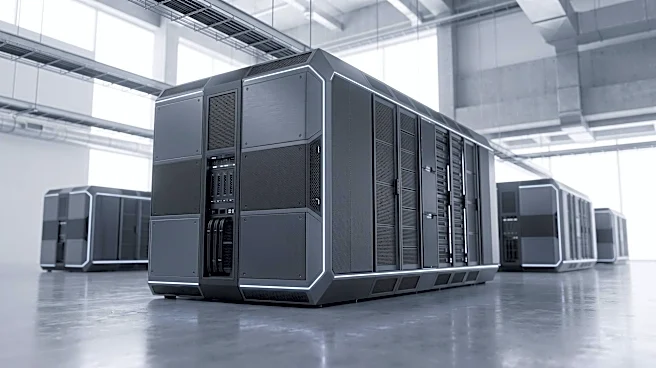
AI products. The position involves contributing to a fast-moving codebase that supports training at an unprecedented scale, focusing on building and optimizing the software stack for massive GPU clusters and high-throughput storage systems. The engineer will work closely with model scientists to implement distributed training parallelism, ensure the reliability and performance of thousands of GPUs, and optimize various components of the AI infrastructure. This initiative is part of Microsoft AI's broader mission to develop frontier-scale models and advance research towards humanist superintelligence, impacting products like Bing and Edge. The team emphasizes a culture of inclusion, innovation, and a growth mindset, with a requirement for employees to work from a designated Microsoft office at least four days a week if they reside within 50 miles of the location.
Why It's Important?
This recruitment highlights Microsoft's significant investment in artificial intelligence, particularly in developing advanced pre-training infrastructure for its AI models. The focus on scaling GPU clusters and optimizing storage systems indicates a commitment to pushing the boundaries of AI capabilities, which could lead to more sophisticated and efficient AI products. For the U.S. technology sector, this signifies a continued demand for highly specialized AI engineering talent, potentially driving innovation and competition in the AI landscape. The development of more powerful AI assistants like Copilot could transform how individuals and businesses interact with technology, enhancing productivity and user experience. Furthermore, Microsoft's emphasis on responsible AI development and human values in its mission statement underscores a growing industry trend towards ethical considerations in AI, which could influence future policy discussions and regulatory frameworks in the U.S. regarding AI safety and control.
What's Next?
The successful candidate will immediately contribute to the development and optimization of Microsoft's AI training infrastructure, directly impacting the performance and capabilities of future AI models. This will involve designing, implementing, testing, and optimizing distributed training infrastructure in Python and C++, profiling and debugging performance bottlenecks, and collaborating with hardware teams to optimize for next-generation accelerators. The role will also involve gathering data and insights to shape the pre-training compute roadmap. The ongoing development in this area is expected to lead to more advanced versions of Copilot and other consumer AI products, potentially introducing new features and efficiencies for users. Microsoft's continuous innovation in AI infrastructure could also set new industry standards for large-scale AI model training and deployment, influencing other tech companies in the U.S. to adopt similar advanced methodologies and infrastructure investments.
Beyond the Headlines
The pursuit of 'humanist superintelligence' by Microsoft AI suggests a long-term vision that extends beyond mere technological advancement, aiming for AI systems that align with human values and amplify human potential. This ambition raises profound ethical and philosophical questions about the future of AI and its integration into society. The emphasis on verification, alignment, and reinforcement learning from human feedback (RLHF) in the job description indicates a proactive approach to addressing potential risks and ensuring AI systems are controllable and beneficial. This could contribute to broader societal discussions in the U.S. about AI governance, the balance between innovation and safety, and the role of corporations in shaping the ethical landscape of emerging technologies. The outcome of these efforts could significantly influence public trust in AI and the regulatory environment for AI development in the coming years.