




What's Happening?
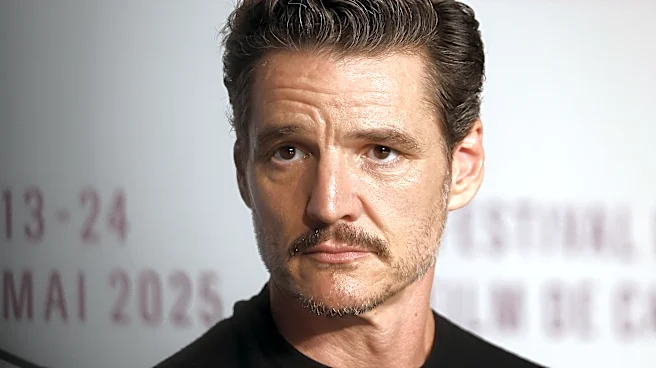
Chilean-American actor Pedro Pascal has learned to play the cello for his starring role in the upcoming film '¡Behemoth!', directed and written by Oscar-winning Tony Gilroy. The film, titled '¡Behemoth! A life. In pieces,' recently premiered its first
trailer. Pascal, 51, expressed his captivation with the story and the intimacy of music during a screening at the New York Film Festival. In the movie, Pascal portrays Alex Serian, a cellist who moves to Los Angeles to care for his ailing mother and escape a controlling ex-partner, played by Olivia Wilde. The narrative alternates between past and present, with music serving as a crucial link for Alex, connecting fragments of his past that appear to have overwhelmed him. The film's soundtrack, composed by nine different artists, is integral to the story, as it is the music performed by the orchestra Alex joins.
Why It's Important?
Pedro Pascal's commitment to learning the cello for his role in '¡Behemoth!' highlights a significant trend in the entertainment industry where actors undertake extensive training to enhance the authenticity of their performances. This dedication can elevate the artistic quality of a film, drawing audiences who appreciate the depth and realism brought to characters. For the U.S. film industry, such efforts can contribute to critical acclaim and box office success, as audiences are often drawn to compelling and believable portrayals. Furthermore, the film's focus on music and its emotional impact could resonate deeply with viewers, potentially influencing cultural perceptions of classical music and its role in storytelling. This approach also underscores the evolving demands on actors, pushing them beyond traditional acting skills to master new crafts for their roles.
What's Next?
The release of '¡Behemoth!' on December 4th will be a key moment to assess the impact of Pascal's performance and the film's unique musical narrative. Critical reception and audience response will determine its success and potentially influence future casting and production decisions in Hollywood. If the film is well-received, it could encourage more actors to invest in similar immersive training for their roles, setting a new standard for authenticity in cinematic performances. Additionally, the film's exploration of music as a narrative device might inspire other filmmakers to integrate musical elements more deeply into their storytelling, potentially leading to a new wave of musically-driven dramas in the U.S. film landscape. The film's performance at the box office and during awards season will also be closely watched.
Beyond the Headlines
Beyond the immediate success of '¡Behemoth!', Pascal's dedication to learning the cello touches upon broader themes of artistic integrity and the pursuit of excellence in creative fields. In an era often characterized by quick productions and reliance on special effects, an actor's commitment to mastering a complex skill like playing a musical instrument can serve as a powerful statement about the value of craft. This approach can inspire not only other actors but also audiences to appreciate the profound effort behind artistic creations. It also highlights the transformative power of art, where a character's journey through music can reflect universal human experiences of struggle, healing, and self-discovery. The film's potential to bring classical music to a wider audience through a compelling narrative could also have a lasting cultural impact.