







What's Happening?
SkilloToys is advocating for screen-free entertainment through its Wooden Pick Up Sticks Game, emphasizing its benefits for child development. The company highlights the game as a classic, hands-on alternative to digital screens, designed to foster crucial
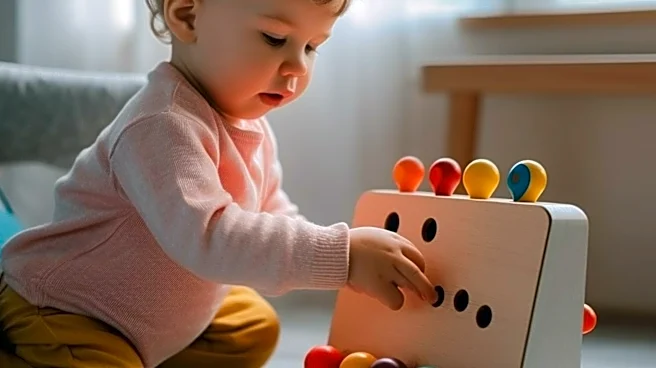
early development skills. The game, featuring vibrant red, blue, and yellow sticks in a star-shaped stand, aims to provide engaging entertainment while subtly building life skills. SkilloToys stresses that the game's simplicity and universal appeal make it suitable for impromptu playtimes, family gatherings, or quiet solo challenges, offering a refreshing break from passive digital entertainment. The company positions the game as a tool for focused engagement, where precision and planning are key, thereby promoting genuine growth beyond mere amusement. This initiative by SkilloToys underscores a growing trend towards traditional play in an increasingly digital world, particularly for children in India, where the product is marketed.
Why It's Important?
The promotion of screen-free toys like the Wooden Pick Up Sticks Game is significant in addressing concerns about excessive screen time among children. In an era dominated by digital devices, initiatives that encourage hands-on, interactive play can positively impact child development by nurturing essential skills that digital platforms often neglect. This approach helps in sharpening fine motor skills and hand-eye coordination, as each delicate attempt to pick up a stick provides a mini-workout for tiny hands, crucial for tasks like writing and drawing. Furthermore, the game fosters strategic thinking and problem-solving as children learn to strategize moves and evaluate risks, developing logical reasoning abilities. Beyond individual skill development, such games promote family bonding and social interaction, offering a warm environment for shared laughter and gentle competition, which is vital for emotional and social growth. This push for traditional toys also supports the market for durable, tactile, and eco-friendly wooden toys, aligning with Montessori-aligned and sustainable parenting choices.
What's Next?
The continued emphasis on screen-free play by companies like SkilloToys suggests a potential shift in consumer preferences towards traditional, educational toys. This trend may lead to increased demand for similar products that offer developmental benefits without digital engagement. Parents, increasingly aware of the potential drawbacks of excessive screen time, might actively seek out such alternatives, driving innovation and expansion in the educational toy market. SkilloToys may further expand its range of classic wooden games and educational toys, catering to a broader audience seeking quality and thoughtful play. The success of such initiatives could also inspire other toy manufacturers to invest in and promote non-digital play options, fostering a more balanced play environment for children. Additionally, there might be a rise in educational content and parenting resources that advocate for and provide guidance on integrating screen-free activities into daily family routines.
Beyond the Headlines
The movement towards screen-free play reflects a broader societal concern about the impact of digital technology on human development and well-being. Beyond the immediate benefits for children, this trend touches upon ethical considerations regarding technology's role in early childhood and the importance of fostering creativity and critical thinking through tangible interactions. It highlights a cultural re-evaluation of what constitutes 'enriching' play, moving away from passive consumption of digital content towards active, hands-on engagement. This shift could also have long-term implications for educational philosophies, potentially influencing curriculum development to incorporate more tactile and experiential learning methods. Furthermore, the emphasis on durable, natural materials like wood in toys aligns with growing environmental consciousness and a desire for sustainable consumption, suggesting a deeper connection between play, education, and ecological values. This re-embrace of traditional play methods could signify a broader societal yearning for simpler, more grounded experiences in an increasingly complex digital world.