
What's Happening?
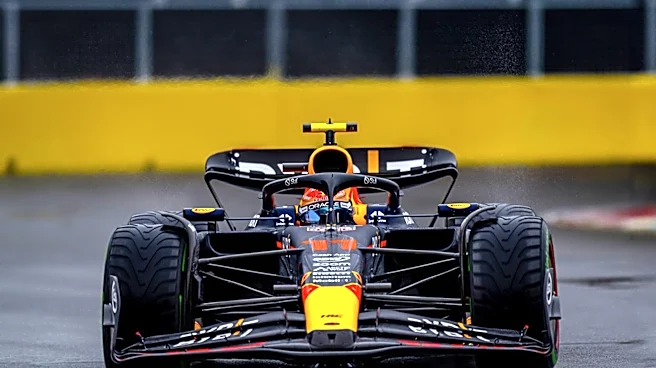
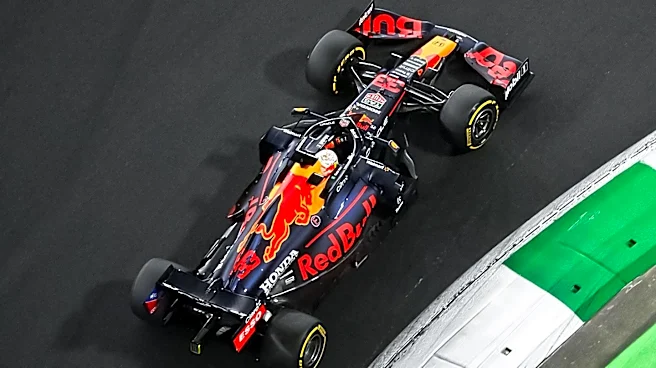
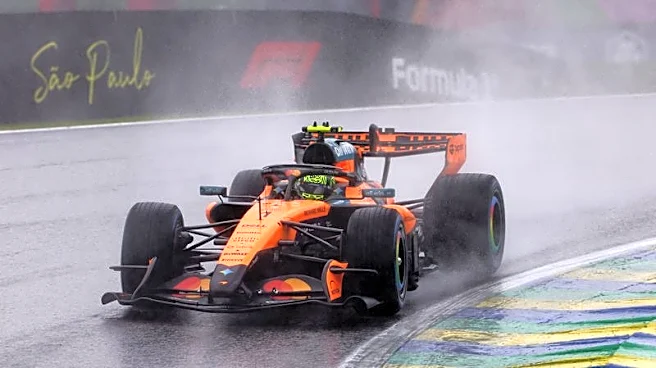
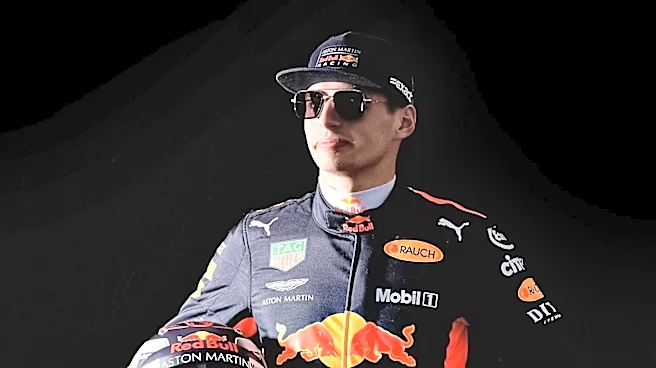
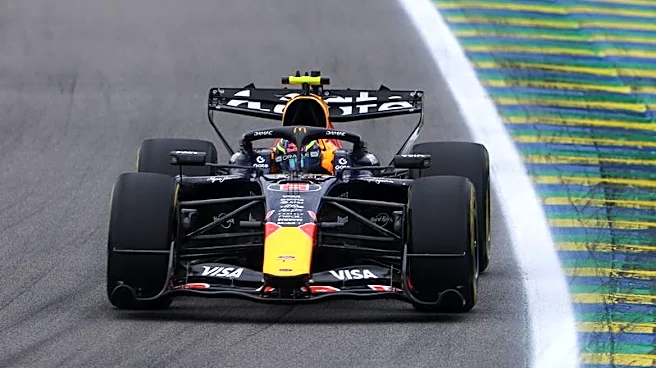
Red Bull team principal Laurent Mekies has stated that Max Verstappen regularly surpasses the performance predictions of their racing simulator. This claim comes after Verstappen's remarkable drive at the 2026 São Paulo Grand Prix, where he climbed from
P21 to second place. His weekend was complicated by an unanticipated power unit problem that resulted in a grid penalty. Despite projections suggesting that overtaking would be more difficult at Interlagos this season, Verstappen defied expectations, making significant progress through the field. This marks the third consecutive year he has demonstrated exceptional recovery drives at this circuit, including a win from P17 in 2024 and a podium finish from the pit lane a year prior.
Why It's Important?
This assertion by Red Bull highlights the extraordinary skill and adaptability of Max Verstappen, suggesting that his driving capabilities exceed even the most advanced simulation models. In a sport increasingly reliant on data and technology, a driver's ability to 'beat the sim' indicates an exceptional talent for on-the-fly decision-making, car control, and race craft, particularly in challenging and changeable conditions. This performance not only secures valuable points for Red Bull but also reinforces Verstappen's reputation as one of the sport's elite drivers. For the team, having a driver who can consistently over-deliver on predictions provides a significant competitive advantage, allowing them to recover from setbacks and maximize results even when circumstances are unfavorable.
What's Next?
The ongoing ability of Max Verstappen to outperform simulator predictions will likely prompt further analysis within Red Bull's engineering and strategy departments. While simulators are crucial for preparation, Verstappen's unique talent suggests that there are still human elements in racing that cannot be fully replicated or predicted by technology. This could influence how Red Bull approaches race strategy and driver development, potentially placing more emphasis on real-world adaptability and instinct. Other teams will undoubtedly observe this phenomenon, seeking to understand if there are transferable lessons or if it is simply a testament to Verstappen's singular talent. His consistent recovery drives will continue to be a key factor in Red Bull's championship aspirations.
Beyond the Headlines
The claim that Max Verstappen 'beats the sim' touches upon a fascinating intersection of human skill and technological advancement in modern sports. While Formula One teams invest heavily in sophisticated simulators for driver training and car development, Verstappen's performances suggest a level of intuitive understanding and execution that goes beyond programmed algorithms. This raises questions about the limits of simulation in capturing the full complexity of real-world racing, especially under pressure and in dynamic conditions. It also underscores the enduring value of raw talent and human ingenuity in an era dominated by data analytics, reminding us that the driver remains a critical, often unpredictable, variable in the pursuit of victory.