


What's Happening?
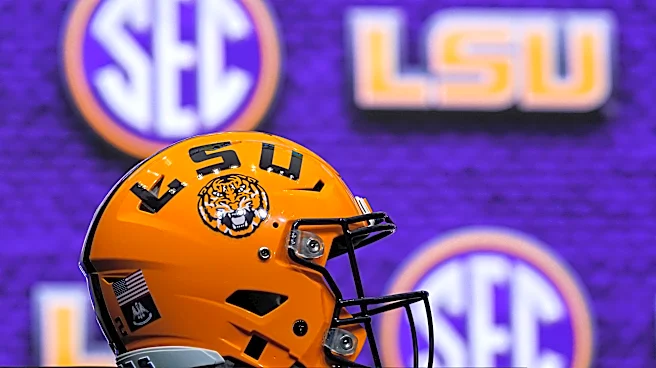
Louisiana Governor Jeff Landry has publicly criticized the Southeastern Conference (SEC) for its new rule that prevents member institutions from signing athletes who previously declared for professional drafts or were rostered by professional teams. This
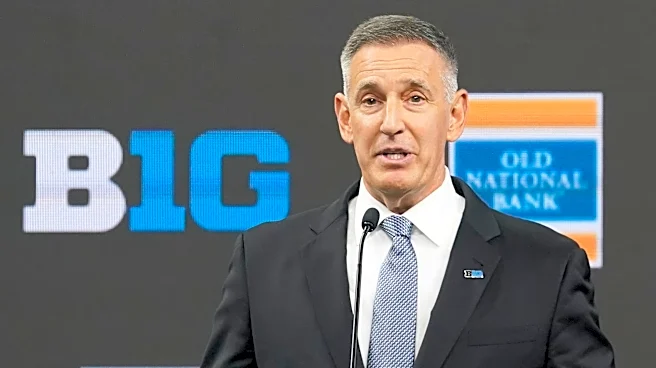
rule directly impacts LSU's efforts to add former professional players, Dae’Quan Wright and Zxavian Harris, to its football roster for the 2026 season. Landry argues that the SEC is creating a 'legal mess' by changing eligibility rules after these players were initially deemed ineligible and subsequently made eligible for a fifth season by a Louisiana court. He contends that the SEC's actions unfairly penalize athletes who were told their college careers were over, moved on to professional endeavors, and are now being punished for not predicting future rule changes. The SEC, along with the Big Ten, announced this new rule, with SEC schools reportedly voting 16-0 in favor, though LSU reportedly abstained.
Why It's Important?
Governor Landry's intervention highlights the growing tension and legal complexities surrounding athlete eligibility and the governance of college sports. This situation underscores the ongoing debate about the balance of power between athletic conferences, state courts, and individual athletes, particularly concerning the transfer portal and the evolving landscape of Name, Image, and Likeness (NIL) rights. The SEC's new rule, and the potential penalties for non-compliance (including suspending a team's coach for half a season and levying a fine equivalent to half the team's operating budget), could significantly impact team rosters, coaching strategies, and the financial stability of athletic programs. It also raises questions about the legal standing of conference rules versus court decisions, potentially leading to further legal challenges and a more fragmented regulatory environment in college athletics. The involvement of a state governor in collegiate sports matters also signals the increasing political dimension of these issues.
What's Next?
The immediate future will likely involve continued legal scrutiny of the SEC's new rule. It remains unclear whether the SEC's penalties will withstand legal challenges, especially given the Louisiana court's decision to make players like Wright and Harris eligible for a fifth season. LSU's stance, having abstained from the vote, suggests potential internal conflict within the SEC regarding this policy. Further reactions from other major stakeholders, including the NCAA, other athletic conferences, and player advocacy groups, are anticipated. This situation could also prompt broader discussions and potential legislative action at both state and federal levels to address the inconsistencies and perceived unfairness in college sports eligibility rules, as Governor Landry has previously stated that 'college sports need to be fixed' and that neither the NCAA nor Congress has adequately addressed the issues.
Beyond the Headlines
This dispute delves into deeper ethical and legal questions about athlete welfare, contractual obligations, and the nature of amateurism in modern college sports. The concept of 'amateurism' has been increasingly challenged by NIL deals and the transfer portal, blurring the lines between collegiate and professional athletics. The SEC's rule, while aiming to maintain a distinction, could be seen as an attempt to reassert control over player movement and eligibility in an era of increasing player agency. The involvement of state courts and governors also highlights a potential shift in governance, where external legal and political bodies may increasingly influence the internal rules of athletic conferences. This could lead to a more litigious environment for college sports, with significant implications for how athletes are recruited, retained, and managed, and how conferences enforce their regulations.