






What's Happening?
Domestic airfares for Thanksgiving and Christmas 2026 have reached their highest averages in at least a decade, according to Hopper's 2026 Holiday Travel Index. Round-trip domestic fares for Thanksgiving week are averaging $402, a 31% increase from the previous
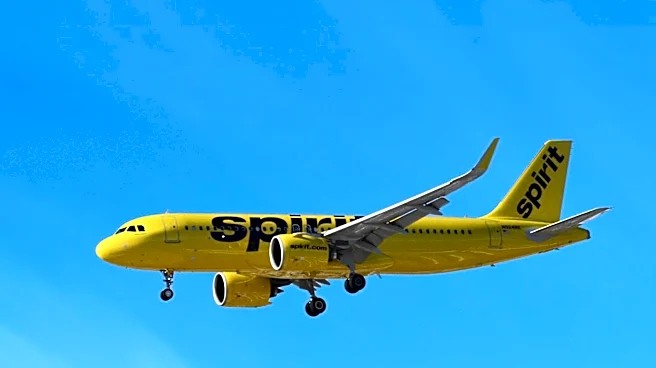
year, while Christmas fares average $452, up 23%. This surge is attributed to two main factors: sustained elevated jet fuel costs due to the ongoing Middle East conflict, which airlines are passing on to consumers, and the cessation of Spirit Airlines' operations on May 2, 2026. Spirit's shutdown removed a significant ultra-low-cost carrier from leisure markets, leading to projected fare increases of 15 to 20 percent on its former routes, with no equivalent budget competitor filling the void. The impact is particularly felt in regions like the Midwest for Thanksgiving and the Northeast for Christmas, reflecting Spirit's concentrated network in leisure hubs such as Florida, Nevada, and Texas.
Why It's Important?
The collapse of Spirit Airlines has significantly altered the competitive landscape of the U.S. domestic airline market, particularly for leisure travel. Its absence has eliminated a key low-fare competitor, allowing remaining carriers to raise prices without immediate competitive pressure. This directly impacts price-sensitive travelers who relied on Spirit for affordable options, especially during peak holiday seasons. The fare increases of 15-20% on former Spirit routes, coupled with rising fuel costs, mean higher travel expenses for millions of Americans. The situation highlights the fragility of the ultra-low-cost carrier model and its critical role in maintaining fare competition. Delta Air Lines CEO Ed Bastian's statement, 'The fares will be a function of what the market bears,' underscores the current market power of major airlines in the absence of robust budget competition.
What's Next?
Travelers planning holiday trips for 2026 are advised to book as soon as possible, as the window for lower fares has already passed for Thanksgiving and is rapidly closing for Christmas. Airlines are expected to continue repricing upwards in the weeks leading up to major holidays. The regional variations in fare increases suggest that markets previously served by Spirit Airlines will continue to experience higher prices. While some major carriers offer itinerary changes, allowing rebooking at lower rates if prices drop, significant softening of prices is not anticipated. The long-term outlook for budget travel in the U.S. remains uncertain, as no new ultra-low-cost competitor has emerged to absorb the capacity displaced by Spirit's exit, potentially leading to sustained higher fares on popular leisure routes.
Beyond the Headlines
The disappearance of Spirit Airlines from the U.S. market represents a broader shift in the airline industry, potentially signaling a move away from aggressive ultra-low-cost competition. This could lead to a more consolidated market where fewer carriers dictate pricing, impacting consumer choice and affordability. The reliance on generative AI tools for trip planning, as reported by Phocuswright research, indicates a growing trend in how travelers seek to navigate these complex and increasingly expensive travel landscapes. However, even advanced AI tools may struggle to find significant savings in a market with reduced competition. The situation also raises questions about regulatory oversight and whether interventions are needed to ensure a healthy competitive environment in the airline sector, especially given the Department of Justice's previous actions against airline mergers.