



What's Happening?
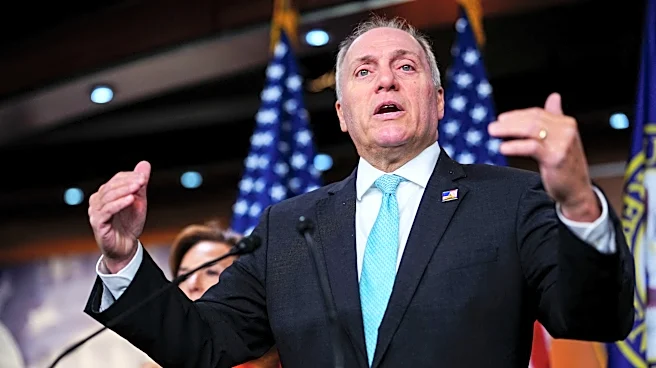
Senators are expressing significant concern regarding potential changes by the House of Representatives to a bipartisan college sports bill that has already passed the Senate. Senator Eric Schmitt, R-Mo., has communicated to House Majority Leader Steve
Scalise, R-La., that altering the Senate-passed version would be a 'mistake' and is advocating for an 'up-or-down vote' in the House. Senate Majority Leader John Thune suggested the House could utilize its suspension calendar, which requires a two-thirds majority, if there is substantial internal GOP opposition. House Majority Leader Scalise has indicated that the House plans to make 'very narrow changes' to the bill and aims to be ready by December. The legislation seeks to prohibit professional athletes from participating in college sports and imposes restrictions on the transfer portal. President Trump is a vocal supporter of the bill. Texas Tech Board of Regents Chair Cody Campbell and New York Yankees President Randy Levine have also met with House lawmakers to discuss the issue.
Why It's Important?
This legislative effort is crucial for the future of college athletics, aiming to bring clarity and structure to a landscape increasingly complicated by issues like player transfers and the blurred lines between amateur and professional status. The bill's provisions, such as barring professional athletes from college sports and regulating the transfer portal, could significantly impact how college sports programs operate, recruit, and retain athletes. Without federal codification, as Senator Thune noted, the collegiate sports system faces a decade of potential litigation, creating instability for institutions and athletes alike. The involvement of President Trump and key figures like Randy Levine underscores the broad interest and perceived urgency in addressing these issues. The differing approaches between the Senate and House highlight the legislative challenges in achieving a unified solution, with senators fearing that delays or significant alterations could jeopardize the bill's passage, especially with an uncertain political landscape in the next Congress.
What's Next?
The immediate next step involves the House of Representatives' actions on the Senate-passed college sports bill. House Majority Leader Steve Scalise has stated that the House intends to make 'very narrow changes' and aims to be ready to proceed in December. Senators, including Maria Cantwell, D-Wash., are closely monitoring the House's deliberations, emphasizing the urgency of the situation and the need to act this year. There is a push from senators like Eric Schmitt for an 'up-or-down vote' on the Senate's version to avoid further delays or substantial amendments. The possibility of the House using its suspension calendar, as suggested by Senate Majority Leader John Thune, indicates a potential strategy to bypass significant internal opposition if necessary. The outcome will depend on negotiations between House and Senate leadership and the willingness of House members to pass a version acceptable to the Senate before the current legislative session concludes.
Beyond the Headlines
The ongoing legislative debate over college sports extends beyond immediate rule changes, touching upon fundamental questions about the nature of amateurism in collegiate athletics and the economic model supporting it. The push to codify rules federally reflects a broader recognition that the current NCAA framework may be insufficient to manage the complexities of modern college sports, particularly with the advent of Name, Image, and Likeness (NIL) rights and the transfer portal. The involvement of figures like Randy Levine, president of a major professional sports franchise, suggests a growing intersection between professional and collegiate sports interests, potentially signaling a future where the two realms are more formally linked or regulated. The legislative efforts could set precedents for how federal government intervenes in sports governance, potentially leading to more federal oversight in areas traditionally managed by private organizations. This could also influence future discussions on athlete compensation, player rights, and the financial sustainability of athletic departments across the nation.