



What's Happening?
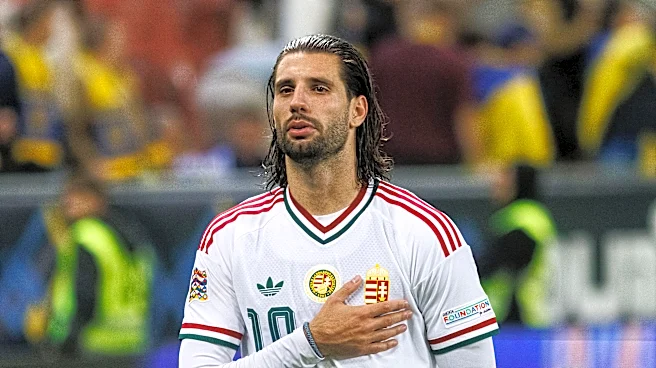
Michael O’Neill, manager of the Northern Ireland football team, celebrated his team's promotion to League A of the UEFA Nations League following a 1-1 draw against Hungary. The crucial match secured Northern Ireland the top spot in Group B2, marking their
first-ever advancement to the competition's top tier. O’Neill was forced to watch the decisive game from the stands at the Puskas Arena due to a touchline ban, which he received after accumulating two yellow cards in previous matches. Despite his absence from the dugout, O’Neill maintained communication with his backroom staff, including former captain Steven Davis, who was directing operations on the touchline. Justin Devenny scored the equalizer for Northern Ireland in the 65th minute, canceling out Hungary's earlier goal by Barnabas Varga. O’Neill praised his team's resilience and the effectiveness of his staff and second-half substitutions, which provided crucial impetus to secure the necessary point for promotion.
Why It's Important?
This promotion is a significant achievement for Northern Ireland football, elevating the national team to the highest level of the UEFA Nations League. Competing in League A will expose the team to stronger opposition, which could foster player development and enhance the team's overall quality and experience. This success also has potential implications for future international competitions, as a higher ranking in the Nations League can influence seedings for qualification draws, such as for Euro 2028. For the football association and fans, it represents a moment of pride and validation for the team's progress under O’Neill's leadership, especially given the team's relatively young squad. The ability to secure promotion despite the manager's touchline ban also highlights the strength and adaptability of the coaching staff and the players' belief in their collective strategy.
What's Next?
Northern Ireland will now prepare to compete in League A of the UEFA Nations League in the 2028/29 season, facing some of Europe's top national teams. This will present a new set of challenges and opportunities for the squad to test its capabilities against elite competition. The team will also look towards upcoming qualification campaigns for major tournaments, where their improved standing from this Nations League performance could potentially offer a more favorable draw. O’Neill and his staff will likely focus on continuing to develop the young talent within the squad, building on the momentum generated by this promotion. The experience gained from playing in League A will be crucial for the long-term development and competitiveness of Northern Ireland football on the international stage.
Beyond the Headlines
The achievement of promotion to League A, particularly under the challenging circumstance of O’Neill's touchline ban, underscores the importance of robust team infrastructure and leadership depth. It demonstrates that effective preparation and a cohesive coaching unit can mitigate the impact of a manager's physical absence during critical moments. This success could also inspire greater investment in youth development programs within Northern Ireland, as the current squad's performance highlights the potential of emerging talent. Furthermore, the emotional resilience shown by the team to come from behind in a high-stakes match, coupled with O’Neill's ability to make impactful decisions from the stands, offers a compelling narrative about strategic adaptability and mental fortitude in professional sports. This could serve as a model for other national teams facing similar constraints or aiming for significant advancement.