



What's Happening?
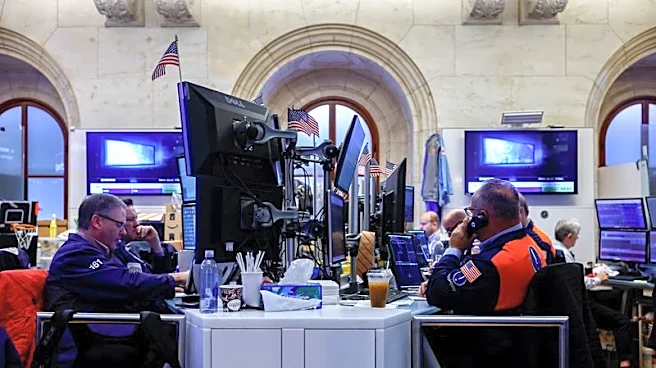
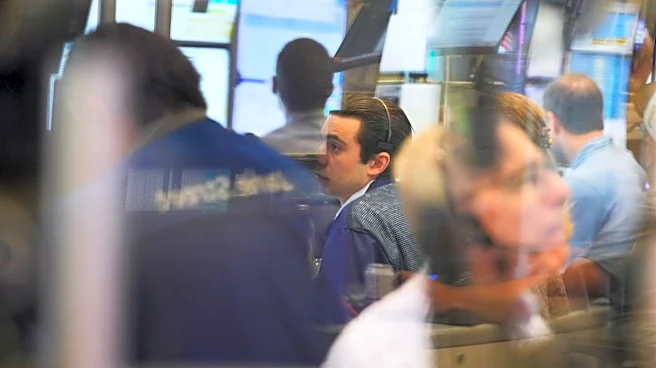
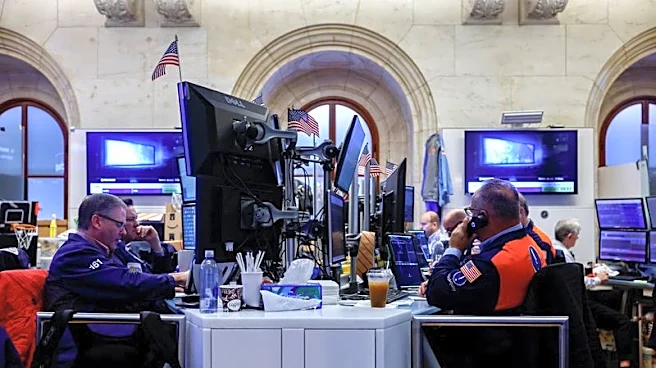
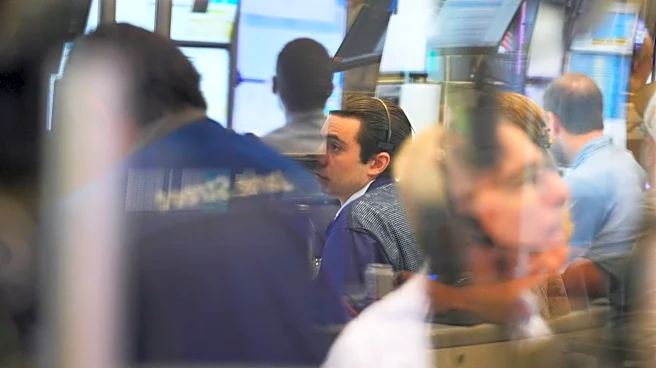
The U.S. stock market experienced a significant rally on Friday after a September jobs report indicated a slowdown in job growth. The economy added 29,000 jobs, falling short of the anticipated 90,000, and the unemployment rate unexpectedly increased
from 4.1% to 4.2%. This softer-than-expected data has led investors to believe that the Federal Reserve may not need to rush into further interest rate hikes. Consequently, bond yields dropped, and major stock indexes, including the Dow Jones Industrial Average and the tech-heavy Nasdaq, saw substantial gains. The market's reaction reflects a 'bad news is good news' sentiment, where weaker economic data is interpreted as a signal for a less aggressive monetary policy from the Fed.
Why It's Important?
This market reaction is important because it directly impacts investor sentiment and the valuation of assets across the U.S. economy. A pause or slowdown in interest rate hikes by the Federal Reserve can reduce borrowing costs for businesses and consumers, potentially stimulating economic activity. For industries, particularly those sensitive to interest rates like technology, lower rates can lead to increased investment and growth. Investors stand to gain from rising stock prices and potentially higher returns on their portfolios. Conversely, a prolonged period of weak job growth could signal underlying economic challenges, but for now, the immediate impact is a positive one for equity markets as the prospect of higher rates recedes. The shift in rate hike expectations also influences the bond market, with yields falling as demand for bonds increases.
What's Next?
Following the September jobs report, market participants are now pricing in an 83% probability that the Federal Reserve will maintain current interest rates at its upcoming October policy meeting. The odds of rates remaining unchanged through the end of the year have also increased to 25%, up from 7% just last week. This suggests that the market anticipates a more dovish stance from the Fed in the near term. Investors will closely monitor future economic data releases, particularly inflation figures and subsequent jobs reports, for further indications of the Fed's monetary policy direction. Any significant deviation from current expectations could lead to renewed market volatility, but for now, the focus is on the potential for a sustained period of stable or lower interest rates.
Beyond the Headlines
The market's 'bad news is good news' reaction highlights a complex dynamic in economic interpretation. While a slowdown in job growth might typically be viewed negatively, in the current context of high inflation and aggressive rate hikes, it is perceived as a necessary cooling of the economy that could prevent a more severe downturn. This phenomenon underscores the intricate relationship between economic indicators, monetary policy, and investor psychology. It also raises questions about the long-term health of the labor market and whether the current slowdown is a temporary adjustment or a precursor to more significant economic challenges. The emphasis on AI-related stocks, like Nvidia, reaching new highs amidst this broader market rally, also points to a continued strong belief in the transformative power of technology, even as traditional economic indicators show signs of softening.