





What's Happening?
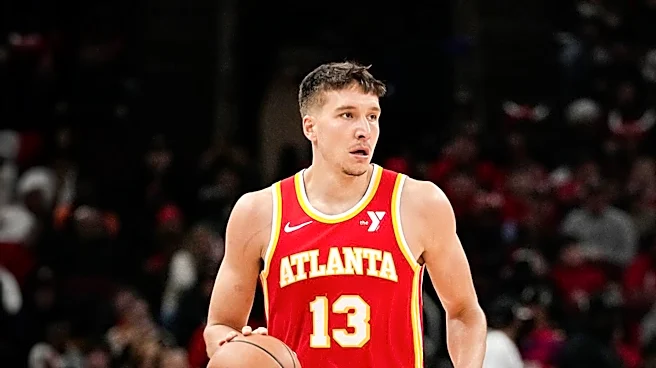
Henri Veesaar, a former North Carolina Tar Heels center, was selected as the 52nd pick in the 2026 NBA Draft by the Atlanta Hawks, who traded with the Los Angeles Clippers to acquire him. Despite receiving offers exceeding $5.5 million to return to college
for another season, Veesaar chose to enter the draft. He has now signed a four-year, $9.3 million contract with the Hawks. The decision to forgo another year at North Carolina is seen as a mistake by some, given the lucrative offers he received to stay in college and the potential to improve his draft position in a less competitive year.
Why It's Important?
Veesaar's decision to enter the NBA Draft rather than return to college has significant implications for his career trajectory. By opting for the draft, he missed out on guaranteed college offers that could have provided financial security and potentially improved his draft stock. The 2026 draft was particularly competitive, pushing many second- and third-tier prospects down the board. Veesaar's choice reflects the broader challenges athletes face in balancing immediate professional opportunities with long-term career development. His situation underscores the financial and strategic considerations athletes must weigh when deciding between college and professional sports.
What's Next?
Veesaar will now focus on establishing himself as a valuable player for the Atlanta Hawks. The team has shown confidence in his potential by offering a contract comparable to higher draft picks. Veesaar's performance in the upcoming season will be crucial in determining his role within the team and his future in the NBA. Meanwhile, North Carolina and other college programs may reassess their strategies for retaining top talent, potentially increasing financial incentives to keep players in college longer.
Beyond the Headlines
Veesaar's decision highlights the evolving landscape of college sports, where financial offers to retain athletes are becoming increasingly common. This trend raises ethical questions about the commercialization of college athletics and the pressure on young athletes to make career-defining decisions early. The situation also reflects broader shifts in the sports industry, where the line between amateur and professional sports is increasingly blurred, impacting how athletes, colleges, and professional teams navigate talent development.