


What's Happening?
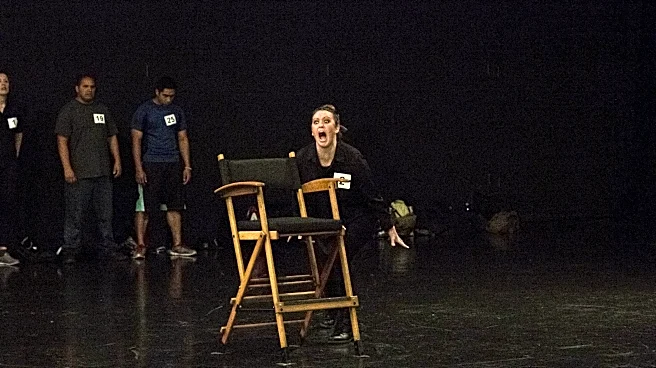
Florida Repertory Theatre is set to premiere a new adaptation of the classic thriller 'Wait Until Dark' on November 24. This adaptation, penned by Jeffrey Hatcher, shifts the setting of the play to 1944, aiming for a film noir feel. Producing Artistic
Director Greg Longenhagen noted that the new version is 'smarter, cleaner, shorter, quicker,' and intensifies the dramatic tension. The story centers on Susan, a woman recently blinded in an auto accident, who unknowingly possesses a doll filled with diamonds in her Greenwich Village basement apartment. A group of criminals, led by the ruthless Roat, attempts to retrieve the doll after her husband leaves for work, forcing Susan to use her wits to survive. The original Broadway play ran for 373 performances in the mid-1960s, earning Lee Remick a Best Actress Tony nomination, while Audrey Hepburn received a Best Actress Oscar nomination for the 1967 film adaptation. The play will run in the historic Arcade Theatre from November 24 through December 13. The cast includes Tess Frazer as Susan Hendrix, Avalyn Calandra and Sarah Salerno as Gloria, Matt Lytle as Susan's husband, and Nicholas Wilder as Roat.
Why It's Important?
The premiere of this new adaptation of 'Wait Until Dark' is significant for the regional theater scene, particularly in Florida, as it brings a fresh perspective to a well-known thriller. By setting the play in 1944 and adopting a film noir style, the production aims to attract both long-time fans of the original and new audiences who appreciate a darker, more suspenseful narrative. This creative choice could influence future adaptations of classic works, demonstrating how reimagining historical contexts can revitalize familiar stories. For Florida Repertory Theatre, this production reinforces its commitment to presenting high-quality theatrical experiences and potentially boosts local tourism and cultural engagement. The involvement of acclaimed playwright Jeffrey Hatcher, known for his diverse adaptations, also highlights the ongoing collaboration between regional theaters and prominent writers, enriching the American theatrical landscape. The play's themes of deception, vulnerability, and resilience resonate with contemporary audiences, offering a compelling exploration of human nature under duress.
What's Next?
Following its premiere on November 24, 'Wait Until Dark' will continue its run at the historic Arcade Theatre until December 13. The success of this adaptation could lead to further regional productions across the U.S., potentially inspiring other theater companies to explore similar creative reinterpretations of classic thrillers. Critical reception and audience turnout during its run will likely determine its broader impact and potential for future stagings. The production's unique film noir aesthetic might also spark discussions within the theater community about the effectiveness of genre shifts in revitalizing established works. Additionally, the performances of the cast, particularly Tess Frazer in the challenging role of Susan, will be closely watched, potentially elevating their profiles within the American theater scene.
Beyond the Headlines
This adaptation of 'Wait Until Dark' delves into deeper implications by exploring themes of perception, trust, and the manipulation of reality. The protagonist's blindness forces the audience to confront how information is processed and how vulnerability can be exploited or overcome. The film noir setting, with its inherent moral ambiguity and shadowy characters, amplifies these themes, suggesting that truth is often obscured and motives are rarely straightforward. The play's enduring popularity, spanning decades and multiple adaptations, speaks to a universal fascination with psychological thrillers and the human capacity for both cunning and resilience. The choice to update the setting to 1944 also subtly comments on historical periods marked by uncertainty and moral compromise, drawing parallels to contemporary societal anxieties. This production, therefore, serves not just as entertainment but as a reflection on the complexities of human interaction and the constant struggle between good and evil.