






What's Happening?
The National Hardwood Lumber Association (NHLA) has formally declared its opposition to the unrestricted export of U.S. hardwood logs, advocating for curtailment of shipments to countries employing 'predatory purchasing practices' that do not support
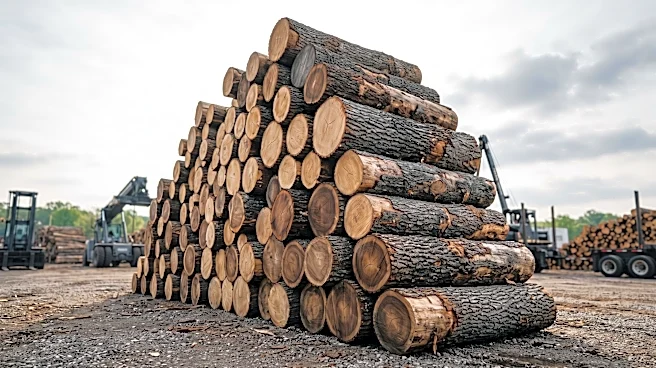
the North American hardwood lumber industry. This stance follows a survey of voting members and comes as log exports have increased significantly, comprising 40.6% of combined log and lumber exports over the 12 months to August, up from 24.6% in 2016. Industry analysts have reported 151 publicly announced sawmill and yard closures since the beginning of 2023. Vietnam has emerged as the top buyer of American hardwood logs, taking 49.3% by value from January to August, with China also increasing its purchases. Despite a peak in May, U.S. hardwood log exports reached $850.8 million from January to August, surpassing the total for 2025.
Why It's Important?
The NHLA's position highlights a growing concern within the U.S. hardwood industry regarding the economic impact of raw log exports. The increase in log exports, particularly to countries like Vietnam and China, is seen as detrimental to domestic hardwood production and employment. The closure of numerous sawmills and yards indicates a significant challenge for U.S. manufacturers who face competition for raw materials. This trend suggests that while log sellers may experience short-term gains, the long-term viability of the U.S. hardwood lumber industry is at risk, potentially leading to further job losses and reduced domestic processing capacity. The issue also underscores a broader debate about the balance between free trade and protecting domestic industries and jobs.
What's Next?
The NHLA's newly formed Hardwood Export Log Policy (HELP) Task Force is expected to present its findings and recommendations at the NHLA's Spring Board Meeting next year. This task force will likely explore potential curbs on log exports, though the association has not yet called for an outright ban. Previous legislative attempts, such as quotas on walnut log exports in the 1960s and a 1989 law banning log exports from eastern federal land, indicate a historical precedent for government intervention. Lawmakers, including Senators Shelley Moore Capito and Jeanne Shaheen, have already urged Trade Representative Jamieson Greer to prioritize hardwood lumber over logs in trade commitments, particularly with China. The outcome of these discussions could lead to new policies or regulations affecting the U.S. hardwood export market.
Beyond the Headlines
The debate over hardwood log exports touches upon complex economic and environmental considerations. While exporting raw logs can provide immediate revenue, it can undermine the domestic value-added processing sector, shifting manufacturing jobs and economic benefits overseas. This situation raises questions about the sustainability of U.S. forest management practices and the long-term economic health of rural communities dependent on the timber industry. The call for policies that favor the export of processed lumber rather than raw logs reflects a desire to retain and grow domestic manufacturing capabilities, ensuring that the economic benefits of U.S. natural resources are realized within the country. This issue also highlights the intricate relationship between international trade, domestic industrial policy, and environmental stewardship.