





What's Happening?
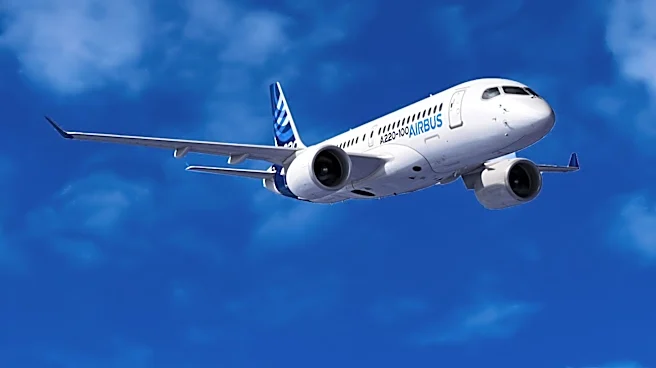
The Airbus A220 has significantly transformed airline networks by enabling carriers to serve markets that were previously underserved. Initially launched by Swiss International Air Lines in 2016, the A220 was designed as an efficient replacement for older
regional jets and small narrowbodies. Its advantages include lower fuel consumption, extended range, and a quieter cabin. The aircraft has allowed airlines to introduce thinner routes, increase flight frequencies, bypass major hubs, and connect secondary cities. Data shows that the A220 network expanded from 31 airport pairs in its launch year to 1,383 by 2025, with annual departures increasing from 2,426 to over 530,000. Major airlines like Delta Air Lines and JetBlue Airways have utilized the A220 to optimize their networks, while Breeze Airways has built its business model around the aircraft's capabilities.
Why It's Important?
The A220's impact on airline networks is significant as it provides carriers with the flexibility to operate more efficiently and profitably. By enabling direct connections between secondary cities, the A220 supports the growing demand for point-to-point services, which is expected to drive the next phase of aviation growth. This shift away from traditional hub-and-spoke models allows airlines to better align capacity with demand, reduce operational costs, and enhance passenger convenience. The A220's success also underscores the importance of innovation in aircraft design, as it meets the evolving needs of the aviation industry. For Airbus, the A220 represents a strategic asset that strengthens its position in the narrowbody market and supports its long-term growth objectives.
What's Next?
As the aviation industry continues to recover from the pandemic, the demand for efficient and versatile aircraft like the A220 is likely to increase. Airbus may seek to capitalize on this trend by securing additional orders and exploring opportunities to expand the A220's capabilities. The upcoming Farnborough International Airshow could provide a platform for Airbus to announce new developments or partnerships related to the A220. Airlines will continue to leverage the A220 to enhance their networks and explore new market opportunities. The success of the A220 could also influence future aircraft designs, as manufacturers prioritize efficiency and flexibility to meet the changing demands of the aviation industry.