










What's Happening?
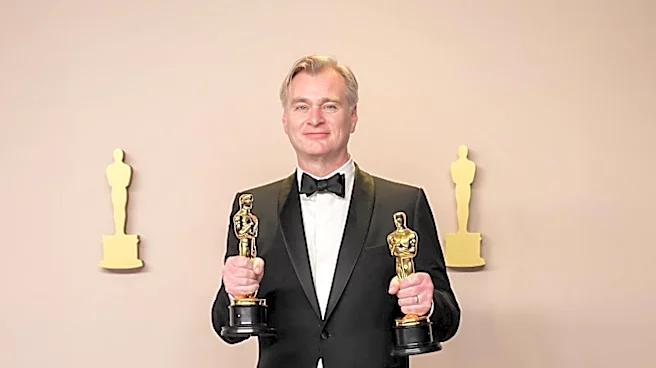
Christopher Nolan, the director of the upcoming film 'The Odyssey,' has articulated his intention to challenge cultural prejudices associated with the depiction of the ancient world. In an interview, Nolan emphasized his desire to present a fresh and
accessible take on the ancient Greek epic, focusing on the earthy and grounded aspects of the story. The film, set during the Bronze Age, features actors using American accents, which Nolan defends as a modern approach to the material. He argues that historical accuracy is based on limited archaeological records, and his goal is to create a consistent and credible world that resonates with modern audiences.
Why It's Important?
Nolan's approach to 'The Odyssey' is significant as it reflects a broader trend in filmmaking where historical narratives are reimagined to appeal to contemporary audiences. By challenging traditional depictions and cultural prejudices, the film could influence how historical epics are perceived and produced in the future. This approach may also spark discussions about the balance between historical accuracy and creative interpretation in cinema, potentially impacting how filmmakers approach adaptations of classical literature.
What's Next?
As 'The Odyssey' approaches its release date, it is likely to generate further discussion and debate among audiences and critics. The film's reception could influence future projects that aim to reinterpret historical narratives. Additionally, the response to Nolan's casting choices and dialogue style may prompt other filmmakers to reconsider how they approach similar adaptations, potentially leading to a shift in the genre's conventions.