







What's Happening?
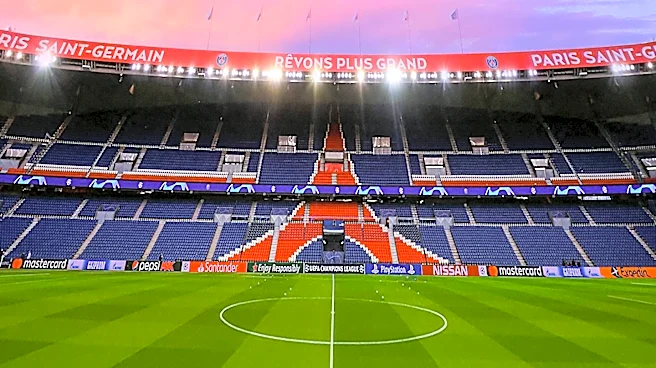
Paris Saint-Germain's (PSG) opening Ligue 1 match against Stade Rennais has been moved from Parc des Princes to Rennes' Roazhon Park. The decision was made by the French Professional Football League (LFP) competitions committee after an assessment revealed
severe damage to the Parc des Princes pitch. PSG stated that the pitch had deteriorated significantly due to an exceptional heatwave, making it unsafe for players. The club expressed regret for the inconvenience caused to supporters. This relocation was agreed upon with Rennes, and reports suggest the return fixture in March might also be played in Rennes, though a formal agreement is pending. PSG had explored other venues in Paris, including Stade Jean-Bouin and Stade Sébastien-Charléty, but was unable to secure them, leading them to seek LFP's assistance.
Why It's Important?
This incident highlights the increasing impact of extreme weather events, such as heatwaves, on professional sports infrastructure and scheduling. For PSG, a major European club, the inability to host their home opener due to pitch conditions underscores the vulnerability of even top-tier facilities to climate-related challenges. The relocation affects not only the club's immediate match-day operations and revenue but also its relationship with fans who had planned to attend. Furthermore, the potential for the return fixture to also be moved to Rennes could set a precedent for how leagues and clubs address similar issues in the future, potentially leading to discussions about climate resilience in stadium design and maintenance. The emphasis on player safety by the LFP also reinforces the growing concern for athlete well-being in the face of environmental changes.
What's Next?
PSG has announced that they have identified a solution for replacing the pitch at Parc des Princes and expect it to be ready for their next home game against Monaco on September 4. The club will communicate information regarding ticket procedures to affected supporters. The LFP and PSG will likely continue discussions regarding the return fixture against Rennes in March, as reports indicate Rennes may be reluctant to host both matches at Roazhon Park due to concerns about overloading their pitch. This situation could prompt further review of league protocols for managing pitch conditions affected by extreme weather and potentially lead to investments in more resilient turf management systems across French football. Other clubs may also assess their own pitch conditions and contingency plans in light of this event.
Beyond the Headlines
The relocation of PSG's home opener due to heat damage extends beyond a mere scheduling change, touching upon broader themes of climate change and its tangible effects on daily life, including professional sports. This event could serve as a stark reminder for sports organizations globally to integrate climate resilience into their long-term planning, from stadium construction and maintenance to operational logistics. It also raises questions about the environmental footprint of sports events and the need for sustainable practices. The incident might spark conversations about the role of sports leagues in advocating for climate action and adapting to a changing environment, potentially influencing future regulations on pitch standards and environmental impact assessments for sporting venues. The financial implications of such disruptions could also drive innovation in turf technology and climate-controlled stadium solutions.