





What's Happening?
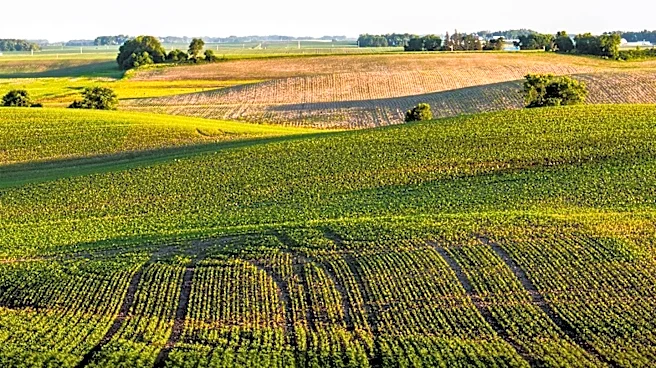
A recent study by the Iowa Farm Bureau, Iowa State University, and the Iowa Bankers Association highlights growing concerns over the agricultural economy in Iowa. The study reveals that 40% of respondents expect a decline in Iowa land values over the next
year, although 82% anticipate an increase over five years. This reflects both immediate pressures and long-term confidence in farmland. The agricultural sector faces challenges such as inflation, tariffs, trade uncertainties, and geopolitical tensions, which contribute to financial vulnerability among farmers. Despite these challenges, Iowa farmers have shown resilience, supported by stable farmland values that bolster their financial positions.
Why It's Important?
The agricultural sector is a significant driver of Iowa's economy, contributing about one-fifth of the state's GDP. A downturn in this sector could weaken the workforce, erode the tax base, and slow commerce in rural communities. The study underscores the importance of addressing economic challenges to maintain the sector's stability. The findings also highlight the need for strategic planning to mitigate risks associated with economic uncertainties and geopolitical tensions, which could have broader implications for the state's economic health.
What's Next?
Stakeholders in Iowa's agricultural sector may need to explore strategies to enhance resilience against economic pressures. This could involve policy interventions to support farmers, such as financial assistance or incentives to adopt sustainable practices. Additionally, monitoring geopolitical developments and their impact on trade and tariffs will be crucial. The study suggests a need for ongoing dialogue among farmers, financial institutions, and policymakers to navigate the challenges and capitalize on long-term opportunities in the agricultural sector.