
What's Happening?
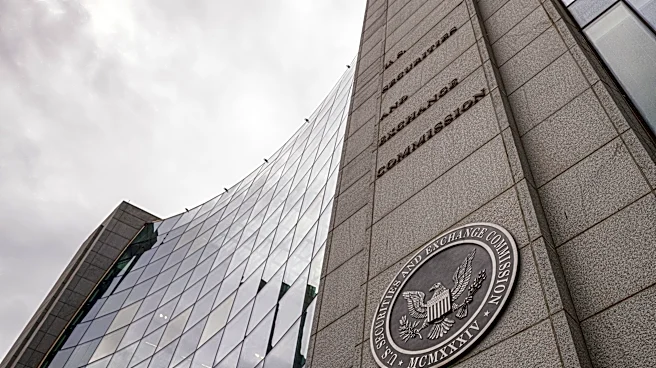
The U.S. Securities and Exchange Commission (SEC) has filed charges against eight rotating shell firms based in Colorado, alleging their involvement in a $37.4 million cryptocurrency scheme. According
to regulators, these firms created fake SEC certificates to defraud approximately 1,500 U.S. investors. The scheme reportedly operated by luring investors from WhatsApp stock chats into bogus token platforms. To project legitimacy, the perpetrators cited real EDGAR filings, which are official documents submitted to the SEC. The SEC's allegations detail a pattern of four consecutive pairings of advisers and exchanges that facilitated the fraudulent activity. This civil suit is currently pending, with the SEC seeking to hold those responsible accountable for the alleged deception and investor losses.
Why It's Important?
This case highlights the ongoing challenges faced by regulators in combating cryptocurrency-related fraud and protecting retail investors. The alleged use of fake SEC certificates and references to legitimate EDGAR filings underscores the sophisticated tactics employed by perpetrators to create an illusion of credibility. The involvement of WhatsApp stock chats as a recruitment tool also points to the vulnerability of social media platforms in facilitating such schemes. If proven, the $37.4 million loss to 1,500 investors demonstrates the significant financial impact these fraudulent operations can have on individuals. The SEC's action signals its continued commitment to policing the digital asset space and holding bad actors accountable, which is crucial for maintaining investor confidence and market integrity in the evolving crypto landscape.
What's Next?
The SEC's civil suit against the eight Colorado shell firms is currently pending, meaning the legal process will unfold in the coming months. This will likely involve discovery, potential motions, and eventually, a trial or settlement. The outcome of this case could result in significant penalties for the alleged perpetrators, including disgorgement of ill-gotten gains, civil monetary penalties, and injunctive relief to prevent future violations. Furthermore, this action may prompt increased scrutiny from the SEC and other regulatory bodies on similar crypto schemes, particularly those leveraging social media platforms and deceptive claims of regulatory compliance. Investors are likely to be reminded of the importance of due diligence and skepticism when encountering investment opportunities, especially in the volatile cryptocurrency market.
Beyond the Headlines
This case delves into the broader implications of regulatory oversight in the rapidly expanding cryptocurrency market. The alleged use of fake SEC certificates raises questions about the effectiveness of current investor education and fraud prevention mechanisms. It also highlights the need for continuous adaptation of regulatory frameworks to keep pace with evolving deceptive practices in the digital asset space. The reliance on WhatsApp chats as a primary recruitment channel points to the challenges of monitoring and policing informal communication platforms for illicit financial activities. This incident could further fuel debates about the extent of regulatory authority over decentralized finance and the responsibility of social media companies in preventing the misuse of their platforms for financial fraud. Ultimately, the case underscores the persistent tension between innovation in financial technology and the imperative to protect consumers from exploitation.