






What's Happening?
Frontier Airlines, now the largest budget airline in the U.S., has reported a significant 71% increase in average fare revenue per passenger during the third quarter of 2026. This surge in airfare comes as the airline attempts to offset soaring jet fuel
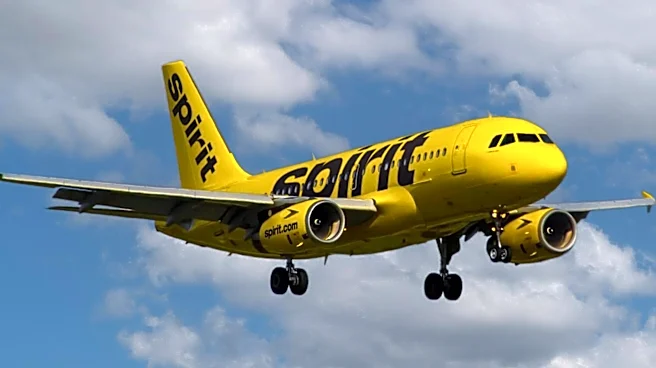
costs, which increased by 56% year-over-year. Despite the higher prices, customer demand for Frontier's services remains stable. The airline also reported a net loss of $104 million for the quarter, primarily due to these elevated fuel expenses. This financial update follows the cessation of all flight operations by Spirit Airlines on May 2, 2026, after a federal rescue package failed to materialize due to creditor objections. Frontier has since expanded its routes and offered discounted fares to fill the void left by Spirit's bankruptcy, with approximately 30% of its business previously overlapping with Spirit's operations.
Why It's Important?
The significant increase in Frontier Airlines' airfares, driven by rising jet fuel costs and the absence of Spirit Airlines, highlights a shifting landscape in the U.S. budget airline sector. Consumers are directly impacted by these higher ticket prices, even as demand remains consistent. For the airline industry, this situation underscores the challenge of balancing operational costs, particularly fuel, with competitive pricing. Frontier's strategy to absorb former Spirit Airlines' market share by expanding routes and offering discounted fares, while simultaneously raising average fares, indicates a complex approach to profitability in a high-cost environment. The net loss reported by Frontier, despite record overall revenue of about $1.4 billion and a 53% year-over-year revenue growth, illustrates the intense pressure that fuel prices exert on airline margins. This scenario could lead to further consolidation or strategic adjustments within the budget airline segment as companies seek to maintain financial stability and market position.
What's Next?
Frontier Airlines is actively implementing strategies to enhance revenue and customer loyalty. The airline plans to introduce first-class fares, with installations beginning this quarter and sales commencing towards the end of the first quarter. Additionally, Starlink Wi-Fi installation is scheduled to begin in the first quarter. These premium offerings are intended to diversify revenue streams and improve the performance of its loyalty program, which saw a 37% year-over-year growth in revenue. Chief Commercial Officer Bobby Schroeter anticipates that these initiatives will create a more stable and diversified revenue base over the next three to five years. The airline is also focusing on improving operational reliability to build customer trust and loyalty. The ongoing impact of jet fuel prices will likely continue to influence pricing strategies and profitability for Frontier and the broader airline industry.
Beyond the Headlines
The current situation in the budget airline sector, marked by Spirit Airlines' collapse and Frontier's strategic adjustments, could signal a broader trend towards reduced competition and potentially higher prices for consumers in the long term. While Frontier has stepped in to fill the capacity gap, the absence of a major competitor like Spirit may diminish the downward pressure on fares that budget airlines typically provide. This could lead to a re-evaluation of the 'ultra-low-cost carrier' model, as airlines grapple with rising operational costs and the need to invest in premium services to attract and retain customers. The shift towards offering first-class fares and in-flight Wi-Fi by Frontier suggests a move away from a purely no-frills approach, potentially blurring the lines between traditional and budget airlines. This evolution could reshape consumer expectations and competitive dynamics within the U.S. domestic air travel market.