




What's Happening?
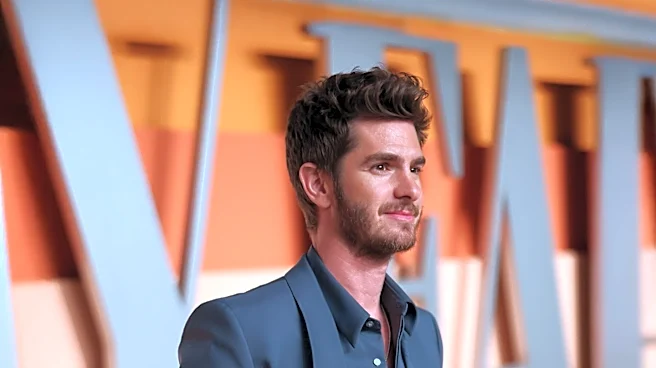
Actor Andrew Garfield has publicly admitted to maintaining a secret Instagram account and acknowledges heavy use of the platform. According to Variety, Garfield described his online habits as frustrating, noting that his screen time notifications are
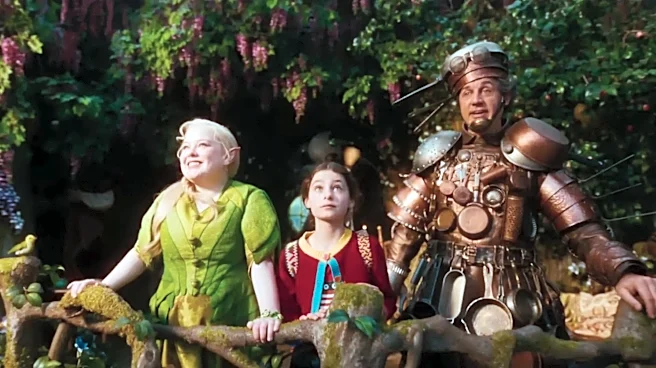
'horrific' and that he feels addicted. He expressed that the design of social media platforms contributes to users' lack of control over their impulses, calling it 'pretty dark.' Garfield revealed that his browsing interests on his secret account include 'weird ceramics' and various Japanese crafts. His comments come as he stars in 'The Magic Faraway Tree,' a film adaptation where his character, along with Claire Foy, plays parents attempting to limit their children's device dependence.
Why It's Important?
Andrew Garfield's candid revelation about his secret Instagram account and his struggle with screen time addiction is significant because it brings a prominent voice to a widespread societal issue. His experience highlights that digital dependency is not limited to specific demographics but affects individuals across all walks of life, including celebrities. This admission can help destigmatize discussions around social media addiction and encourage more open conversations about digital well-being. For the tech industry, Garfield's comments serve as a high-profile critique of platform design, suggesting that features are intentionally crafted to maximize engagement, potentially at the expense of user mental health. This could intensify calls for greater corporate responsibility in developing less addictive digital environments and for more robust tools to help users manage their screen time. Furthermore, his specific browsing interests in 'weird ceramics' and Japanese crafts illustrate the diverse and often niche ways individuals engage with social media, showcasing its role beyond mainstream content consumption.
What's Next?
Andrew Garfield's public statements may contribute to a broader dialogue about social media's impact on mental health and addiction. This could lead to increased public pressure on social media companies to implement more ethical design practices and provide better tools for users to manage their digital consumption. It might also encourage more individuals to reflect on their own screen time habits and seek ways to reduce their dependency on platforms. For Garfield himself, his role in 'The Magic Faraway Tree,' which touches upon children's device dependence, suggests a personal and professional alignment with the theme of digital moderation. This could lead him to become a more vocal advocate for digital well-being initiatives or to explore further projects that address the complexities of technology in modern life. The entertainment industry might also see a trend of more public figures sharing their experiences with digital challenges, further normalizing these conversations.
Beyond the Headlines
Beyond the immediate news of a celebrity's social media habits, Garfield's comments tap into a deeper societal anxiety about the pervasive influence of technology on daily life and mental health. His description of platform design as 'dark' and intentionally manipulative raises ethical questions about the business models of social media companies, which often rely on maximizing user engagement and data collection. This situation highlights the tension between technological innovation and human well-being, prompting a re-evaluation of how digital tools are integrated into our lives. The existence of a 'secret' account also speaks to the curated nature of public online identities versus private digital consumption, revealing a more authentic, perhaps less performative, aspect of online behavior. This duality underscores the complex psychological landscape of social media, where individuals navigate public presentation, personal interests, and the often-unseen struggles with digital dependency.