

What's Happening?
Syracuse University fashion design students are actively choosing to create their own Halloween costumes, moving away from store-bought options and fast fashion. In the weeks leading up to October 31st, the seventh floor of the Nancy Cantor Warehouse
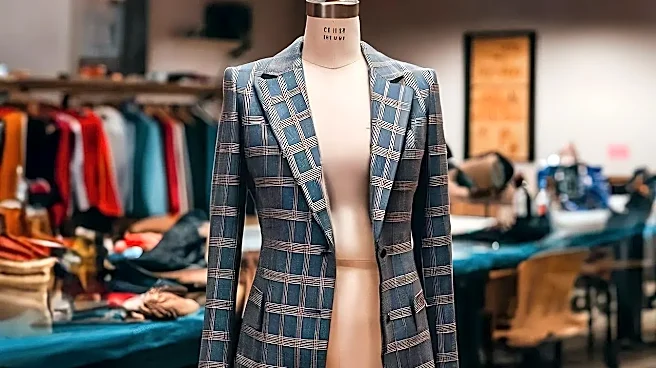
at Syracuse University is bustling with students engaged in pinning, sewing, and cutting various fabrics and textiles. This creative endeavor is not for academic assignments but for personal expression and a stand against fast fashion. Students like Leila Pierre-Louis, a junior fashion design major, find this process rewarding as it offers creative freedom from start to finish. Becca Fierro, a sophomore, is recreating a 1999 Yves Saint Laurent haute couture look, the 'Floral Bride,' using a bikini set and fake roses. Ella Davis, also a sophomore, is crafting a 2005 Victoria's Secret runway-inspired Santa look. These students are utilizing their design skills to produce unique, personalized costumes, often upcycling materials and sharing tips with peers.
Why It's Important?
This trend among Syracuse University fashion design students highlights a growing awareness and rejection of fast fashion practices within the younger generation, particularly those in design fields. Fast fashion is often criticized for its environmental impact, ethical concerns regarding labor practices, and promotion of disposable clothing culture. By opting for handmade costumes, these students are not only showcasing their creativity and technical skills but also advocating for sustainable and ethical consumption. This movement can influence broader consumer behavior, encouraging more individuals to consider the origins and environmental footprint of their purchases. It also underscores the value of craftsmanship and personalization in an era dominated by mass-produced goods, potentially inspiring a resurgence of DIY culture and conscious consumerism. The students' actions demonstrate that fashion can be both expressive and responsible, challenging the notion that affordability must come at the expense of ethics or environmental well-being.
What's Next?
The initiative by Syracuse University students could inspire similar movements in other universities and communities, potentially leading to a wider adoption of sustainable practices in fashion and costume creation. As these students graduate and enter the fashion industry, their commitment to ethical and sustainable design could influence future trends and business models. There may be an increase in workshops or community events focused on DIY fashion and upcycling, further promoting these values. Additionally, the visibility of these student projects could prompt discussions within the fashion industry about the need for more sustainable production methods and greater transparency in supply chains. This could also lead to more educational programs emphasizing sustainable design and ethical sourcing, preparing future designers to address the challenges posed by fast fashion.
Beyond the Headlines
Beyond the immediate act of creating Halloween costumes, this movement touches upon deeper societal and cultural shifts. It reflects a growing desire for authenticity and individuality in a world saturated with commercialism. The act of making something by hand, as described by the students, offers a sense of accomplishment and creative control that is often missing in consumer culture. This trend also serves as a form of quiet activism, using personal choices to challenge the dominant narrative of consumption. Ethically, it raises questions about the responsibility of designers and consumers in mitigating the negative impacts of the fashion industry. Culturally, it could foster a renewed appreciation for traditional crafts and skills, moving away from a throwaway mentality towards a more mindful approach to clothing and personal expression. This shift could contribute to a broader cultural re-evaluation of value, prioritizing sustainability and ethical production over sheer volume and low cost.