





What's Happening?
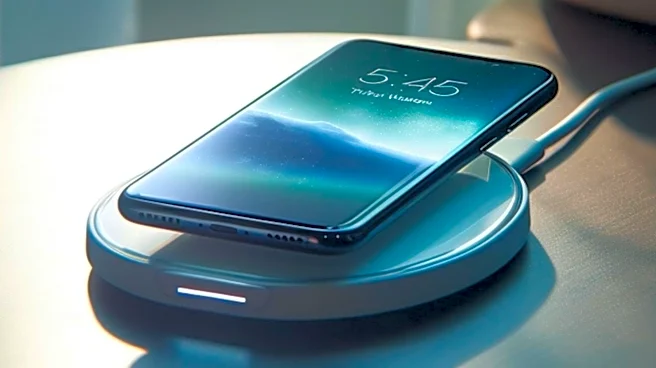
Minseo Jung has developed an innovative product called the 'Cone Wireless Charger and Digital Detox,' which aims to help individuals reduce their smartphone usage. This device is shaped like a familiar orange traffic cone, symbolizing 'do not use,' and serves
as a visual cue to encourage users to disengage from their digital devices. When a smartphone is placed face-down and covered by the cone, it charges wirelessly while simultaneously hiding the screen. This design is intended to minimize the urge to constantly check the phone, thereby providing a psychological break from screen time. The Cone also functions as a mini ambient light, making it a dual-purpose item that fits into various home or office settings. Unlike traditional wireless chargers that prioritize speed and efficiency, Jung's design focuses on transforming the user's relationship with their phone by offering a physical and psychological separation without requiring digital interaction.
Why It's Important?
The 'Cone Wireless Charger and Digital Detox' addresses a growing societal concern regarding excessive smartphone use and its impact on mental well-being and interpersonal relationships. In an era dominated by constant digital connectivity, tools that encourage intentional disengagement can be crucial for improving attention spans, sleep quality, and overall mental health. This product offers a tangible, non-digital solution to a problem often tackled by digital wellness apps, which still require interaction with the device. By providing a physical barrier and a visual reminder to disconnect, the Cone could help individuals reclaim time for hobbies, rest, and face-to-face interactions. Its success could inspire further innovations in product design that prioritize user well-being over pure technological advancement, potentially shifting consumer expectations for tech accessories to include features that promote healthier digital habits.
What's Next?
The introduction of products like the 'Cone Wireless Charger' suggests a growing market for 'digital detox' solutions. Future developments might include similar devices that integrate other features designed to encourage mindful technology use, such as timed locking mechanisms or ambient soundscapes. The concept could also be adopted by workplaces or educational institutions looking to foster environments with reduced digital distractions. Consumer response to the Cone will likely influence whether other designers and manufacturers explore non-digital approaches to managing screen time. If successful, this could lead to a broader trend where everyday objects are re-imagined with built-in features that promote healthier digital boundaries, potentially influencing how technology is integrated into daily life to support, rather than detract from, personal well-being.
Beyond the Headlines
The 'Cone Wireless Charger' highlights a deeper cultural shift towards recognizing the psychological and social costs of hyper-connectivity. It underscores the idea that sometimes, the most effective solutions to technology-induced problems are not more technology, but rather thoughtful design that encourages disconnection. This product taps into a growing desire for intentional living and a re-evaluation of the role of digital devices in personal and professional lives. It also raises questions about the responsibility of tech companies to design products that not only offer functionality but also promote user well-being. The Cone's simple yet effective approach could spark conversations about the ethics of attention economy and the need for tools that empower individuals to regain control over their digital habits, fostering a more balanced relationship with technology in the long term.