
What's Happening?
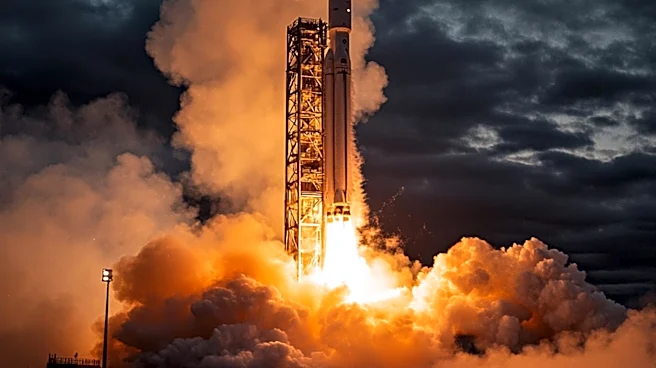
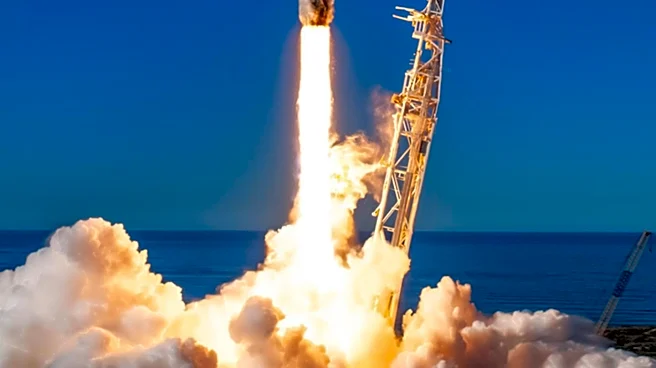
SpaceX successfully launched 29 Starlink internet satellites into low Earth orbit on August 11, 2026. The launch took place from Cape Canaveral Space Force Station in Florida, utilizing a Falcon 9 rocket.
This mission marks the 93rd Falcon 9 launch of the year, with 72 of those dedicated to expanding the Starlink constellation. The first stage of the Falcon 9 rocket, designated B1085, completed its 18th flight and successfully landed on the droneship 'A Shortfall of Gravitas' in the Atlantic Ocean. SpaceX's Starlink project currently operates over 10,900 active satellites, with plans to expand to 100,000 Starlink V3 satellites and potentially launch a million AI data center satellites.
Why It's Important?
The expansion of the Starlink satellite network is significant for global internet connectivity, particularly in remote and underserved areas. By increasing the number of satellites, SpaceX aims to provide high-speed internet access worldwide, which could transform communication and economic opportunities in isolated regions. The success of these launches also reinforces SpaceX's dominance in the commercial space launch market, showcasing its capability to conduct frequent and reliable missions. This growth in satellite infrastructure supports SpaceX's broader ambitions in space exploration and technology development.
What's Next?
SpaceX plans to continue its aggressive launch schedule to further build out the Starlink constellation. The company is also working on deploying more advanced Starlink V3 satellites, which promise enhanced capabilities. As SpaceX expands its satellite network, it will likely face regulatory and competitive challenges, particularly concerning space debris management and spectrum allocation. The company's future plans include launching AI data center satellites, which could revolutionize data processing and storage in space.