








What's Happening?
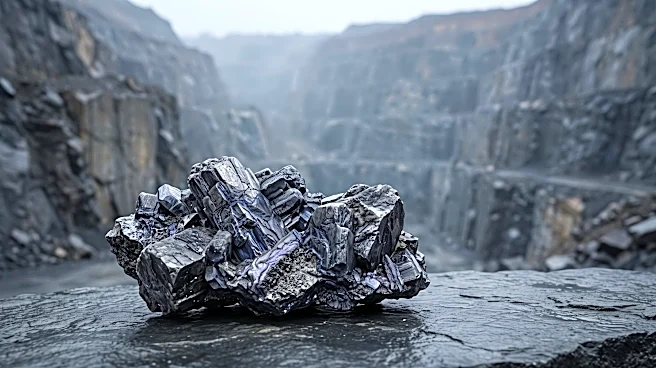
The International Crisis Group has released a visual investigation detailing how Myanmar's valuable mineral deposits, including jade, tin, gold, and heavy rare earth elements, are intrinsically linked to its ongoing civil war. These resources, crucial
for global industries ranging from electronics and artificial intelligence to clean energy and defense, are often extracted in conflict zones. The investigation, utilizing satellite imagery, field research, and data analysis, reveals that the struggle for control over these minerals is actively financing armed actors, altering trade routes, and influencing the trajectory of the civil war. While natural resources are not the primary cause of Myanmar's conflicts, their exploitation plays a significant role in sustaining and shaping the hostilities. The findings also highlight that increased access to Chinese supplies of rare earths could deepen global reliance on those originating from Myanmar's conflict-affected regions, despite the mounting environmental damage caused by mining operations.
Why It's Important?
This report is important because it exposes the complex interplay between global supply chains and regional conflicts, particularly concerning critical minerals. For the U.S. and its allies, this connection raises significant concerns about ethical sourcing, supply chain resilience, and national security. Industries reliant on these minerals, such as technology, automotive (electric vehicles), and defense, face the risk of inadvertently supporting conflict through their procurement practices. The reliance on minerals from conflict zones can also create vulnerabilities in supply chains, especially as rare earths become a central point in U.S.-China discussions on critical mineral access. Furthermore, the environmental harm caused by mining in these areas adds another layer of concern, potentially leading to long-term ecological damage and humanitarian crises. Understanding these dynamics is crucial for developing responsible sourcing strategies and mitigating the broader geopolitical and economic risks associated with critical mineral extraction.
What's Next?
The findings from the International Crisis Group are likely to intensify scrutiny on global supply chains for critical minerals. Businesses and governments may face increased pressure to implement more robust due diligence processes to ensure their supply chains are not inadvertently funding armed conflicts or contributing to human rights abuses and environmental degradation. Discussions between the U.S. and China regarding access to critical minerals, particularly rare earths, could be influenced by these revelations, potentially leading to calls for greater transparency and accountability in the sourcing of these materials. International organizations and advocacy groups are expected to leverage this report to push for stronger international regulations and monitoring mechanisms for mineral extraction in conflict zones. Companies may also explore alternative sourcing strategies or invest in recycling technologies to reduce their reliance on newly extracted minerals from high-risk areas.
Beyond the Headlines
The report delves into the ethical and geopolitical complexities of resource extraction in conflict zones, highlighting a less obvious implication: the potential for global industries to inadvertently perpetuate conflicts. The demand for advanced technologies, clean energy solutions, and defense systems creates a powerful economic incentive for the extraction of these minerals, even in unstable regions. This dynamic raises profound ethical questions for consumers and corporations alike regarding the true cost of modern conveniences and strategic necessities. Culturally, it underscores the often-invisible human and environmental toll associated with the globalized economy. Legally, it could prompt discussions about expanding the scope of international humanitarian law and corporate social responsibility to better address the financing of armed groups through resource exploitation. The long-term shift could involve a re-evaluation of global trade practices, prioritizing ethical sourcing and sustainability alongside economic efficiency, potentially leading to a more conscious and responsible global economy.