


What's Happening?
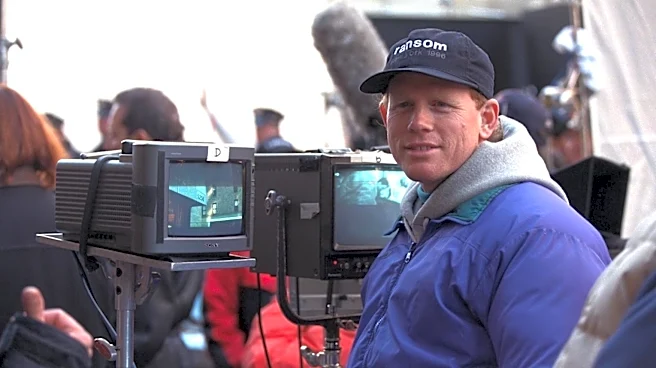
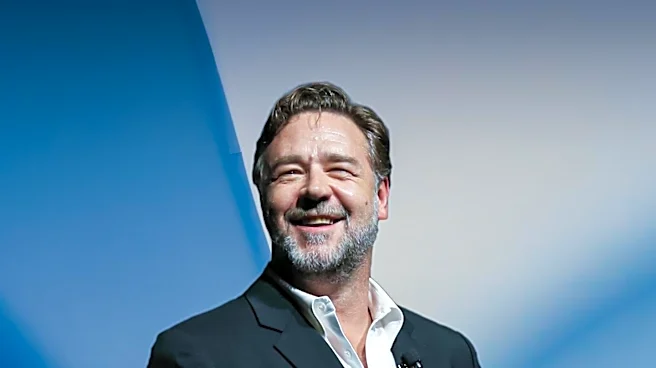
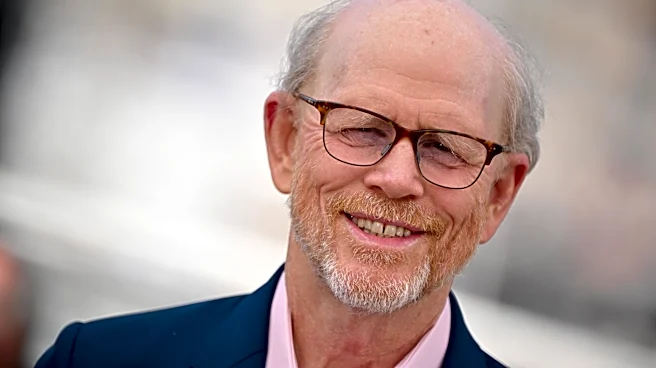
Director Ron Howard revealed that Russell Crowe's request to shoot the 2001 film 'A Beautiful Mind' in chronological order added approximately $1 million to the movie's production budget. Crowe, who portrayed mathematician John Forbes Nash Jr., believed
that filming sequentially would better allow him to calibrate the character's psychiatric journey, which was central to the film's narrative. Howard initially had to 'dig in with the studio' to approve the additional cost, which included two separate trips to Princeton, New Jersey, for filming. Despite the increased expense, Howard stated he is 'convinced it was the right kind of investment' and praised Crowe's 'brave and consistently detailed performance.' The film went on to win four Oscars, including Best Picture and Best Director for Howard.
Why It's Important?
This revelation highlights the significant impact that creative decisions, even those seemingly minor, can have on a film's budget and production logistics. Crowe's insistence on a chronological shoot, while costly, ultimately contributed to a critically acclaimed and Oscar-winning performance, demonstrating the value of investing in an actor's process. For the film industry, it underscores the balance between artistic integrity and financial constraints. It also showcases the trust and collaboration between a director and lead actor, where a director like Ron Howard was willing to advocate for a decision that he believed would enhance the final product, despite the financial implications. This approach can set a precedent for how studios evaluate and support creative requests that deviate from standard production practices.
What's Next?
The film 'A Beautiful Mind' is set to have a new 4K remastering hitting theaters for its 25th anniversary. This re-release will allow new audiences and long-time fans to experience the film with enhanced visual quality. The story behind its production, including the $1 million decision, may gain renewed attention, further cementing its place in cinematic history as an example of how creative investment can lead to significant artistic and commercial success. The anecdote also serves as a case study for film students and industry professionals on the complexities of film production and the value of supporting an actor's craft.
Beyond the Headlines
The decision to shoot 'A Beautiful Mind' chronologically touches upon deeper aspects of method acting and character development. For an actor like Russell Crowe, portraying a character with a complex psychiatric journey, the sequential filming allowed for a more organic and authentic progression of the character's mental state. This contrasts with the typical practice of shooting out of sequence for logistical and financial efficiency. The success of 'A Beautiful Mind' with this approach suggests that sometimes, breaking from conventional production methods, even at a higher cost, can yield superior artistic results. It also raises questions about the psychological toll on actors who immerse themselves deeply in challenging roles and how production schedules can either support or hinder that process.