







What's Happening?
The 1927 silent horror film 'London After Midnight,' directed by Tod Browning and starring Lon Chaney, has achieved a legendary reputation despite being a lost film. The movie, which premiered in American cinemas in December 1927, disappeared after its
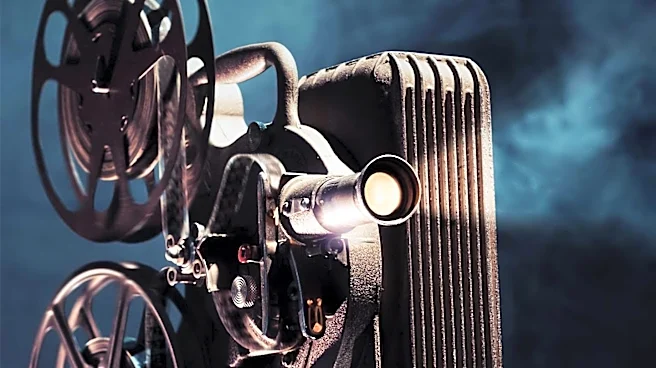
initial release. Its most iconic image, featuring Chaney in a towering hat with bulging eyes and pointed teeth, has survived and is widely recognized, even though the film itself is no longer viewable. The film was a murder mystery disguised as supernatural horror, with Chaney playing a Scotland Yard investigator who uses a vampire masquerade to uncover the truth behind a suspicious death. The disappearance of the film is attributed to the use of highly flammable and chemically unstable cellulose nitrate film stock, common in early cinema, and the studios' initial disregard for preserving older films as cultural artifacts. A Library of Congress survey indicates that 70% of American silent feature films are now completely lost.
Why It's Important?
The enduring legacy of 'London After Midnight' highlights the significant cultural loss of early American cinema. The destruction of nitrate film stock due to its inherent instability and the lack of preservation efforts by studios resulted in the permanent loss of a vast portion of silent films. This situation underscores the fragility of early cinematic history and the challenges in preserving cultural heritage. The film's survival as an iconic image, detached from its original moving picture, demonstrates how certain elements of a lost work can transcend its physical absence and continue to influence popular culture. It also serves as a poignant reminder of the importance of film preservation and the ongoing efforts to recover and restore cinematic history, even if only through reconstructions from surviving materials.
What's Next?
While a complete print of 'London After Midnight' is not currently known to exist, the possibility of its rediscovery remains, as lost films occasionally emerge from archives or private collections. In the interim, efforts to reconstruct the film from surviving production stills, publicity photographs, and contemporary documentation continue. In 2002, a restoration producer assembled a version for Turner Classic Movies using original title artwork and hundreds of surviving still photographs, creating a forty-minute reconstruction. These reconstructions, while not the original film, offer insights into its narrative, composition, and atmosphere. The ongoing fascination with 'London After Midnight' ensures that it will continue to be a subject of cinematic archaeology and a symbol of the broader cultural loss of silent cinema.
Beyond the Headlines
The phenomenon of 'London After Midnight' becoming more famous after its disappearance reveals a deeper psychological and cultural dynamic. Its absence allows horror fans to project their ideal silent nightmare onto the film, unconstrained by the actual cinematic experience. This creates a unique space where the imagined version of the film can be more potent than any potential reality. Furthermore, the film's status as a 'ghost story' of cinema highlights the ethical and cultural responsibility of preserving artistic works. The accidental weight carried by surviving publicity stills, originally intended for marketing, now serves as crucial evidence of a lost artwork's existence. This situation prompts reflection on how cultural value is assigned and re-evaluated over time, especially when the original artifact is no longer accessible.