





What's Happening?
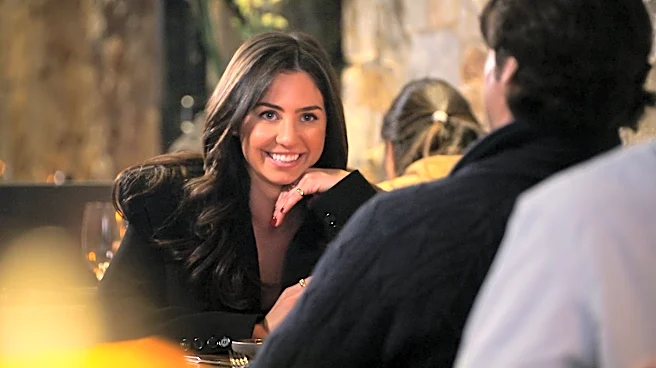
Michaella Giorgio, a participant in 'Love Is Blind' season 11, has opened up about the breakdown of her relationship with Rob Feeley, which was prominently featured in episode nine, titled 'Buzz Kill.' Despite appearing to be one of the most compatible
couples during the initial stages, including a seemingly successful trip to Mexico and positive family meetings, their relationship deteriorated rapidly. Giorgio recounts that the stress of filming combined with their demanding jobs began to take a toll shortly after they moved in together. The turning point came during a dinner with Rob's friends, where Giorgio was subjected to demeaning comments, and Rob's behavior became increasingly erratic and inebriated. This was followed by another public outburst from Rob at a cast gathering, where he made disruptive comments and expressed disdain for the show, leading Giorgio to conclude that marriage was not possible. Giorgio revealed that she had repeatedly suggested they leave the show together to alleviate the stress, but Rob consistently chose to stay, only to then act out.
Why It's Important?
This account from Michaella Giorgio highlights the significant pressures and complexities faced by participants in reality dating shows like 'Love Is Blind.' It underscores how the artificial environment of such programs, combined with personal and professional stressors, can profoundly impact relationships that initially appear strong. The narrative sheds light on the potential for emotional manipulation and the challenges of maintaining authenticity when under constant surveillance and production demands. For viewers, it offers a behind-the-scenes perspective that often contrasts with the curated on-screen portrayal, raising questions about the welfare of participants and the ethical responsibilities of reality television producers. The story also serves as a cautionary tale about the rapid escalation of relationship issues under duress, demonstrating how external pressures can expose underlying incompatibilities or behavioral patterns that might otherwise remain hidden in a less intense setting.
What's Next?
Following Michaella Giorgio's revelations, public discussion around the ethical implications and psychological impact of reality television on its participants is likely to intensify. Viewers and critics may scrutinize the production methods of 'Love Is Blind' and similar shows, potentially leading to calls for greater transparency and support systems for cast members. For Giorgio, sharing her experience could bring both public support and further scrutiny, as audiences process the events that unfolded. The show's producers might face pressure to address the concerns raised about participant well-being and the portrayal of relationships. Future seasons of 'Love Is Blind' may see increased attention on how cast members cope with stress and how their interactions are edited, potentially influencing the show's format or participant selection process to mitigate similar incidents.
Beyond the Headlines
The 'Love Is Blind' incident involving Michaella Giorgio and Rob Feeley delves into deeper societal implications regarding gender dynamics and public perception. Giorgio's experience of being subjected to demeaning comments from Rob's friends and Rob's subsequent failure to protect her, followed by his own public outbursts, highlights issues of respect and accountability within relationships, particularly when exposed to public scrutiny. The narrative also touches on the psychological toll of reality television, where individuals' vulnerabilities are amplified for entertainment. It prompts a broader conversation about the authenticity of relationships formed under such conditions and the long-term emotional consequences for participants. The show's portrayal of these events can influence public understanding of healthy relationship boundaries and the impact of external pressures on personal integrity, contributing to ongoing discussions about media ethics and the representation of human relationships.