
What's Happening?
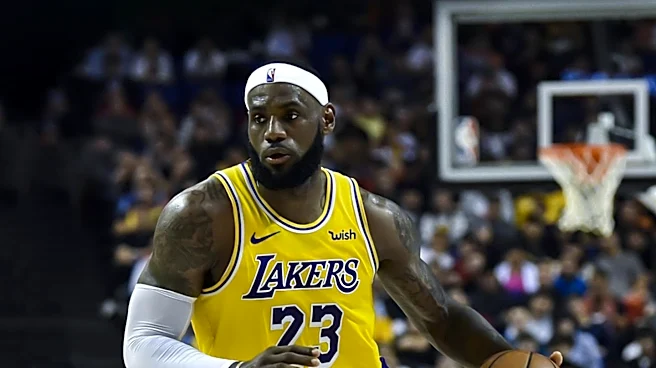
LeBron James and his company, LBJ Trademarks LLC, have filed a lawsuit against PlayVision Inc., the creator of the sports betting app 'Bron.' The suit, filed on November 17 in the U.S. District Court for
the Southern District of New York, alleges trademark infringement, false endorsement, and false advertising. The core of the complaint centers on an AI-generated advertisement for the 'Bron' app that features an AI version of James, depicted in an NBA locker room, wearing a 'Bron' jersey, and speaking in a synthesized version of his voice. The advertisement shows the AI James scrolling through bets on his phone and commenting on Phoenix Suns forward Dillon Brooks. James, who has an exclusive endorsement deal with Kalshi-rival Polymarket, asserts that the ad creates a false impression of his affiliation with the app and suggests he wagers on NBA games, which is prohibited for NBA players. The lawsuit also highlights the app's alleged violation of New York's law requiring disclosure for AI-generated 'synthetic performers' in advertisements, as the 'Bron' ad carried no such disclosure.
Why It's Important?
This lawsuit underscores the growing legal and ethical challenges posed by artificial intelligence, particularly concerning the unauthorized use of celebrity likenesses. For U.S. industries, especially entertainment, sports, and advertising, the case sets a precedent for how AI-generated content will be regulated and how intellectual property rights will be protected in the digital age. The outcome could influence how companies approach marketing campaigns involving AI, potentially leading to stricter guidelines and increased scrutiny to avoid legal repercussions. For public policy, it highlights the need for robust legal frameworks to address the rapid advancements in AI technology and its potential for misuse. The case also impacts economic stakeholders by emphasizing the value of celebrity endorsements and the financial implications of their unauthorized use, potentially affecting endorsement deals and the valuation of personal brands. The NBA's stance on players betting on games is also reinforced, as the ad falsely implies James's involvement in such activities, which could erode public trust in the integrity of the sport.
What's Next?
The lawsuit seeks an injunction to prevent PlayVision Inc. from further using James's name and likeness, repayment of profits generated through the alleged infringement, and compensatory and punitive damages. PlayVision Inc. cofounder Anish Gupta initially suggested a name change for the app in response to a cease and desist letter from James's team, and the app was subsequently renamed 'Evie.' However, the lawsuit argues that this belated name change does not remedy the prior exploitation of James's brand. The legal proceedings will likely involve a detailed examination of existing trademark and publicity rights laws in the context of AI-generated content. The case could lead to a landmark ruling that clarifies the legal boundaries for using AI to create and disseminate celebrity likenesses in advertising. Reactions from other celebrities, sports leagues, and technology companies will be closely watched, as the outcome could shape future practices and regulations surrounding AI and intellectual property.
Beyond the Headlines
This case delves into the deeper implications of AI's ability to replicate human identity, raising critical questions about authenticity, consent, and the commercial exploitation of personal attributes. The use of AI to create a 'synthetic performer' without explicit permission touches upon the ethical dimensions of digital identity and the potential for deepfakes to mislead the public. It highlights a broader societal concern about the blurring lines between reality and AI-generated content, and the challenges in distinguishing between genuine endorsements and fabricated ones. The lawsuit also brings to light the 'attention economy' where companies might intentionally provoke controversy to gain visibility, treating legal consequences as a marketing expense. This strategy, if successful, could incentivize similar behaviors, leading to a proliferation of unauthorized AI-generated content. The legal battle will not only determine the financial and reputational consequences for the parties involved but also contribute to the evolving legal and ethical discourse surrounding AI's role in shaping public perception and commercial practices.