






What's Happening?
Heidi Levitt, a feature film casting director and director of the documentary 'Walk With Me,' has published an essay titled 'You Can’t Cast Your Family' in Time.com. In her essay, Levitt shares her personal journey as a caregiver for her husband, Charlie
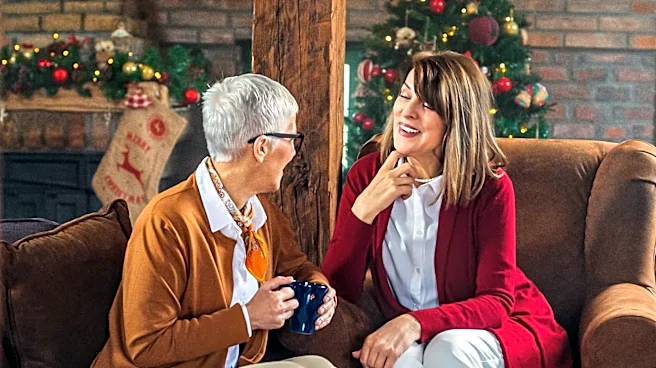
Hess, who was diagnosed with early-onset Alzheimer's at age 57. She recounts the challenges and the initial silence surrounding his diagnosis within their family, emphasizing how 'fear of the unknown has a funny way of disguising itself as good manners.' Levitt's essay serves as a call to action, urging families gathering for the holidays to be vigilant for early signs of memory or thinking changes in loved ones, to engage in difficult conversations about care, and to overcome the discomfort of addressing such sensitive topics.
Why It's Important?
Heidi Levitt's essay is important because it addresses a critical public health issue: early-onset Alzheimer's disease and the societal reluctance to confront its early signs. By sharing her personal experience, Levitt sheds light on the emotional and practical challenges faced by caregivers and families dealing with this devastating condition. Her call to action during the holiday season is particularly impactful, as family gatherings often provide the first opportunities to observe subtle changes in behavior or cognitive function. This initiative can help destigmatize discussions around cognitive decline and encourage proactive measures, such as early diagnosis and care planning. Early intervention can significantly improve the quality of life for individuals with Alzheimer's and their families, making Levitt's advocacy a valuable contribution to public awareness and health education.
What's Next?
Heidi Levitt's essay and her documentary 'Walk With Me,' which is set to premiere nationally on PBS stations in February 2027, are expected to continue raising awareness about early-onset Alzheimer's and the importance of early detection and open family communication. The national broadcast of her film will likely amplify her message, reaching a wider audience across the U.S. This increased visibility could lead to more families initiating conversations about cognitive health, seeking medical advice for concerning symptoms, and planning for future care needs. Advocacy groups and healthcare organizations may also leverage Levitt's story to promote their own initiatives related to Alzheimer's awareness and support for caregivers. The essay's timing during the holiday season is strategic, aiming to prompt immediate action and observation within family units.
Beyond the Headlines
Levitt's narrative extends beyond the medical aspects of Alzheimer's, delving into the profound emotional and social dynamics within families facing chronic illness. Her experience highlights the often-overlooked burden on caregivers and the need for societal support systems. The essay also subtly critiques the cultural tendency to avoid uncomfortable truths, particularly concerning aging and illness, which can delay crucial interventions. By advocating for 'uncomfortable conversations,' Levitt challenges a societal norm that often prioritizes politeness over proactive health management. This initiative could foster a more open and supportive environment for individuals and families navigating similar health challenges, encouraging empathy and practical planning. Her work underscores the power of personal storytelling in driving public health advocacy and social change.