






What's Happening?
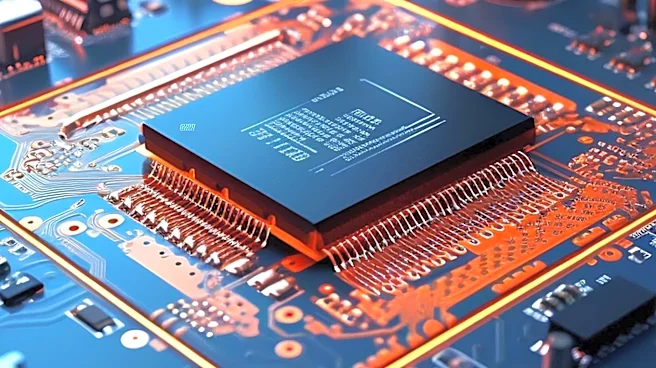
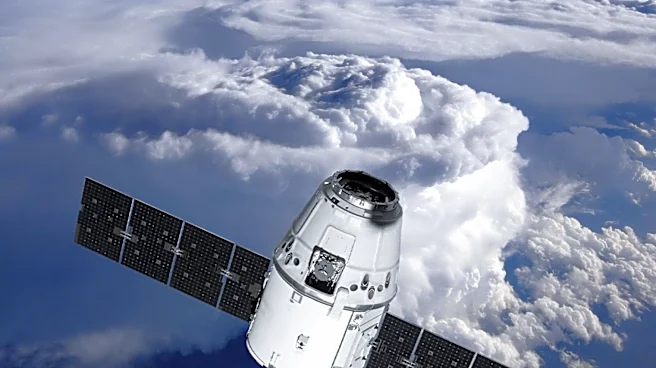
Besxar, a company focused on in-space manufacturing, has successfully completed its first suborbital mission, demonstrating the viability of its semiconductor manufacturing technology above the Kármán line. The mission, which flew on a SpaceX Falcon 9
on July 5, carried semiconductor wafers from Besxar, as well as for researchers from the University of Virginia and the University of Texas at Austin. A key aspect of the demonstration was proving that Besxar's specialized canisters could maintain a vacuum environment while preventing contamination, including from atomic oxygen present in Low Earth Orbit (LEO). The hardware also successfully protected the semiconductor wafers throughout the flight, including during re-entry. This initial flight is part of a larger contract with SpaceX for 12 suborbital missions, with the second mission anticipated before the end of the year. Besxar aims to leverage the natural vacuum of space to produce higher-quality and lower-cost semiconductors compared to terrestrial methods.
Why It's Important?
This successful suborbital demonstration by Besxar marks a significant step forward for in-space manufacturing, particularly in the semiconductor industry. The ability to produce semiconductors in the vacuum of space could lead to the creation of advanced chips with superior properties that are difficult or impossible to achieve on Earth. This innovation has the potential to impact various U.S. industries, including aerospace, defense, and advanced electronics, by providing access to next-generation components. For the U.S. economy, this could foster a new sector of space-based manufacturing, creating jobs and intellectual property. Companies currently reliant on terrestrial semiconductor production might face competition from these new space-manufactured products, potentially driving down costs or improving performance across the board. Furthermore, the defense sector could benefit from more robust and advanced electronics for critical systems.
What's Next?
Following this initial success, Besxar plans to conduct 11 more suborbital flights under its contract with SpaceX, with the next mission expected by the end of the year. These subsequent missions will likely focus on further refining the manufacturing process, testing different materials, and scaling up production capabilities. As the company expands to longer in-space manufacturing missions, its canisters will be integrated into larger vehicles like Starship for launch, in-space operations, and re-entry. This progression suggests a future where Besxar could establish a more permanent presence in orbit for semiconductor production. The company's ability to outsource re-entry technology to launch providers simplifies its operational model, allowing it to focus on the core manufacturing process. Continued success could attract further investment and partnerships, accelerating the development of a space-based semiconductor industry.
Beyond the Headlines
The concept of manufacturing in space, particularly for sensitive components like semiconductors, opens up profound implications beyond immediate economic benefits. Ethically, it raises questions about resource utilization in space and the potential for orbital debris if not managed carefully. Legally, the framework for intellectual property rights and regulatory oversight for products manufactured in orbit and returned to Earth will need to evolve. Culturally, this development could shift perceptions of space from purely exploration or satellite deployment to a viable industrial frontier. The long-term shift could see a decentralization of critical manufacturing processes, potentially enhancing supply chain resilience for advanced technologies. This also highlights a growing trend of leveraging unique space environments for industrial advantages, pushing the boundaries of what is considered possible in manufacturing and potentially leading to entirely new classes of materials and products.