



What's Happening?
The Federal Open Market Committee (FOMC) is concluding its meeting with a rate decision expected soon. The market anticipates a 62% chance that the Federal Reserve will maintain the current interest rate range of 3.50% to 3.75%. However, rising oil prices,
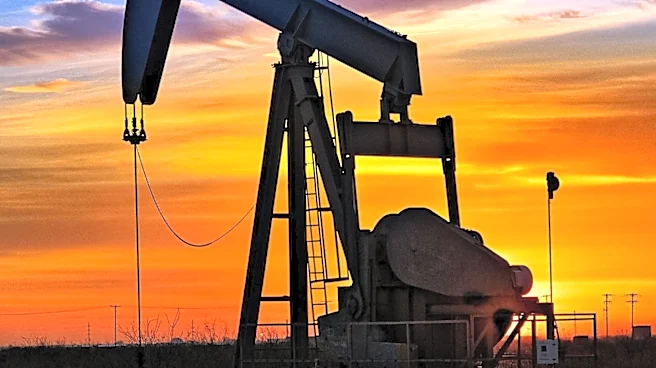
driven by geopolitical tensions, are increasing inflationary pressures, which could influence the Fed's decision-making process. The FOMC is divided on whether to implement another rate hike before the end of the year, with half of the officials in favor and the other half against. The outcome of the meeting and the Fed's future actions will be closely watched by investors and economists.
Why It's Important?
The Federal Reserve's decision on interest rates is critical for the U.S. economy, as it influences borrowing costs, consumer spending, and overall economic growth. Rising oil prices add complexity to the Fed's mandate of maintaining inflation stability, as they contribute to higher inflation rates. The Fed's response to these pressures will have significant implications for financial markets, businesses, and consumers. A decision to raise rates could slow economic growth but may be necessary to curb inflation. Conversely, maintaining current rates could support economic activity but risk further inflationary pressures.
What's Next?
Investors and analysts will be looking for signals from the Fed regarding its future policy direction, particularly in response to rising oil prices. The tone of the Fed's communication and any indications of future rate hikes will be critical in shaping market expectations. Additionally, geopolitical developments affecting oil prices will continue to be a key factor in the Fed's decision-making process. The Fed's ability to balance inflation control with economic growth will be a central focus in the coming months.